
Stainless steel material grades
Stainless Steel Round Bar
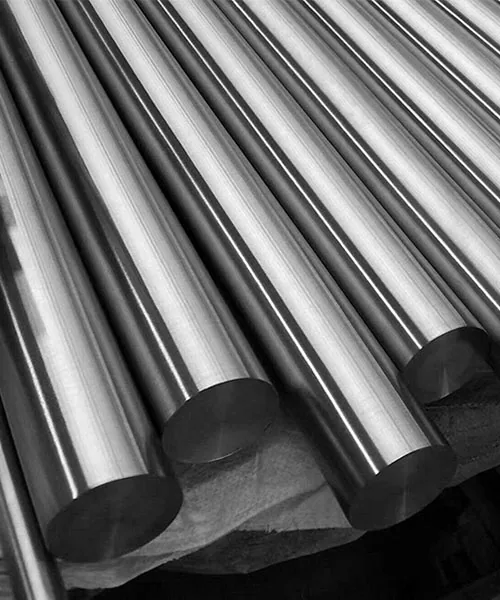
Stainless Steel Round Bars are solid cylindrical bars made from iron-based alloys containing at least 10.5% chromium. They are used to produce shafts, fasteners, fittings, pins, valves and other machined components. Their corrosion resistance, strength and machining characteristics depend on the selected grade and its supply condition.
Austenitic, ferritic, martensitic and precipitation-hardening stainless steels are supplied for different engineering requirements. Round bars are specified by grade, standard, diameter, length, condition, surface finish and inspection requirements. The grade directory below lists the material pages available for comparison.
- Product depth
- 34 grade options
- Primary form
- Round bar
- Designation systems
- ASTM, UNS, DIN, SUS and JIS references
- Enquiry basis
- Grade, standard, size, quantity, condition and destination
Product discovery
Stainless steel grade directory
Search by grade or use the series links to compare product specifications.
300 Series Stainless Steel
17 grade pagesStainless Steel 304 Round Bar
View productStainless Steel 304L Round Bar
View productStainless Steel 304H Round Bar
View productStainless Steel 310 Round Bar
View productStainless Steel 310S Round Bar
View productStainless Steel 314 Round Bar
View productStainless Steel 316 Round Bar
View productStainless Steel 316L Round Bar
View productStainless Steel 316H Round Bar
View productStainless Steel 316Ti Round Bar
View productStainless Steel 317 Round Bar
View productStainless Steel 317L Round Bar
View productStainless Steel 321 Round Bar
View productStainless Steel 321H Round Bar
View productStainless Steel 347 Round Bar
View productStainless Steel 347H Round Bar
View product400 Series Stainless Steel
10 grade pagesStainless Steel 410 Round Bar
View productStainless Steel 415 / F6NM Round Bar
View productStainless Steel 416 Round Bar
View productStainless Steel 420 Round Bar
View productStainless Steel 422 Round Bar
View productStainless Steel 430 Round Bar
View productStainless Steel 430F Round Bar
View productStainless Steel 431 Round Bar
View productStainless Steel 440C Round Bar
View productStainless Steel 446 Round Bar
View productPH and Special Grades
7 grade pagesStainless Steel 13-8PH Round Bar
View productStainless Steel 15-5PH Round Bar
View productStainless Steel 17-4PH Round Bar
View productStainless Steel 254 SMO Round Bar
View productStainless Steel 904L Round Bar
View productStainless Steel Nitronic 50 Round Bar
View productStainless Steel Nitronic 60 Round Bar
View productNo matching grade is shown. Check the spelling or send the required standard to the sales team.
Selection and procurement
Define the complete stainless steel requirement
A grade name alone is not a complete purchase specification. Include the governing standard, diameter, length, quantity, condition, finish, tolerance, testing, marking, documentation, destination, and requested timing.
Material identityGrade, UNS, DIN, SUS, JIS, or governing standard
DimensionsDiameter, length, tolerance, and quantity
Supply conditionCondition, finish, heat treatment, and machining allowance
VerificationTesting, inspection, marking, and documentation
Forms in the current catalogue
Stainless steel bar forms
Specify round, square, hex, bright, forged, hot-rolled bar or rod as required. Confirm the grade and form combination with our team.
- Round bar
- Square bar
- Hot-rolled bar
- Hex bar
- Bright bar
- Forged bar
- Rod
Material and product information
Stainless Steel Round Bar Technical Information
Stainless steel contains chromium that forms a thin protective oxide film on the metal surface. This film helps resist corrosion in many service conditions. The level of protection varies with chromium, nickel, molybdenum and other alloying elements, as well as the surrounding temperature, chemicals and surface condition.
Round bars are commonly produced by hot rolling or forging, with further processing such as peeling, cold drawing, grinding or polishing. For a machined component, the correct grade and material condition are as important as the bar diameter or surface finish.
What Are the Main Grades of Stainless Steel Round Bars?
Stainless steels are grouped by their structure and alloy composition. The 300 series includes many austenitic grades, while several 400 series grades are ferritic or martensitic. Precipitation-hardening and other special grades are used where particular strength, corrosion or wear properties are required.
| Grade or group | Main characteristics | Typical selection considerations |
|---|---|---|
| 304 and 304L | General-purpose austenitic stainless steels; 304L has lower carbon. | Equipment parts, fasteners, fabricated and welded components. |
| 316 and 316L | Molybdenum-bearing austenitic grades; 316L has lower carbon. | Improved resistance to pitting in many chloride-bearing environments compared with 304. |
| 303 | Sulfur-modified austenitic grade with improved machinability. | High-volume machining where its reduced corrosion resistance and weldability are acceptable. |
| 321 and 347 | Titanium-stabilized and niobium-stabilized austenitic grades. | Selected elevated-temperature and welded service requirements. |
| 410 and 420 | Martensitic grades that can be heat treated for increased hardness. | Shafts, valve parts, wear-related components and tooling, as appropriate. |
| 430 | Ferritic chromium stainless steel. | Applications needing moderate corrosion resistance without high nickel content. |
| 17-4PH | Precipitation-hardening stainless steel with high strength after appropriate aging. | Shafts, fasteners and engineered components with defined strength requirements. |
| 904L and 254 SMO | High-alloy austenitic grades. | More demanding corrosion environments; suitability needs detailed service review. |
| Nitronic 50 and Nitronic 60 | Nitrogen-strengthened special stainless steels with differing performance priorities. | Nitronic 50: strength and corrosion resistance; Nitronic 60: galling and wear resistance. |
The above descriptions are a selection guide, not a statement that grades are interchangeable. The full material designation, condition and applicable specification must be checked for each part.
Stainless Steel Round Bar Specifications
Requirements for stainless steel bars are set by the applicable material and product standard. ASTM A276/A276M is commonly used for stainless steel bars and shapes. ASTM A479/A479M is used for stainless steel bars and shapes for boilers and other pressure-vessel applications. These standards do not apply identically to every grade or order, so the current specification and grade requirements must be verified.
| Specification | Details |
|---|---|
| Product form | Solid round bar and rod |
| Material families | Austenitic, ferritic, martensitic, precipitation-hardening and specialty stainless steels |
| Common grades | 303, 304, 304L, 316, 316L, 321, 347, 410, 420, 430, 17-4PH, 904L and others |
| Common bar standard | ASTM A276/A276M, where applicable |
| Pressure-service bar standard | ASTM A479/A479M, where applicable |
| Manufacturing methods | Hot rolled, forged or cold finished, according to grade and product requirements |
| Surface conditions | Hot worked, annealed/descaled, peeled, bright, ground, polished or machined as specified |
| Dimensions | Specified diameter, length, straightness and permitted tolerances |
| Material condition | Annealed, solution annealed, quenched and tempered, aged or other specified condition, depending on grade |
| Inspection | Chemical analysis, mechanical testing, dimensional checks and additional examinations as required |
What Is the Chemical Composition of Stainless Steel Round Bars?
The main alloying element in stainless steel is chromium. Nickel is commonly added to many austenitic grades, while molybdenum is used in grades such as 316 and 316L to improve resistance to localized corrosion in certain environments. Carbon, nitrogen, manganese, silicon and stabilizing elements can influence strength, corrosion resistance and fabrication behaviour.
For example, 304 is a chromium-nickel austenitic stainless steel, while 316 contains molybdenum in addition to chromium and nickel. The exact composition limits depend on the grade and applicable standard; a mill test certificate should be used to verify the supplied material.
What Are the Mechanical and Physical Properties of Stainless Steel Round Bars?
There is no single strength or hardness value for all stainless steel round bars. Austenitic grades are generally supplied with good ductility and toughness, while heat-treatable martensitic and precipitation-hardening grades can achieve higher strength in defined conditions.
| Property | General information |
|---|---|
| Density | Common stainless steels are approximately 7.7–8.1 g/cm³; the exact value depends on grade. |
| Corrosion resistance | Varies with alloy composition, surface condition, environment and temperature. |
| Tensile and yield strength | Grade- and condition-dependent; use the relevant standard and test certificate. |
| Ductility | Many annealed austenitic grades have good ductility; other families differ. |
| Magnetic behaviour | Many annealed austenitic grades are weakly magnetic or effectively non-magnetic; ferritic and martensitic grades are generally magnetic. |
| Heat treatment | Austenitic grades are usually not hardened by conventional heat treatment; martensitic and PH grades have specific heat-treatment routes. |
| Machinability | Varies by grade; free-machining grades such as 303 and 416 are developed for easier machining. |
How Are Stainless Steel Round Bars Manufactured?
Stainless steel bar production generally begins with melting, casting and hot working. Round bars may be hot rolled or forged, then heat treated and descaled as required. Finishing operations such as straightening, peeling, drawing, grinding or polishing are used to achieve the requested dimensions and surface condition.
Bars intended for machining may be supplied with additional machining allowance. Cold-finished bars can offer improved surface quality and dimensional control, but the required mechanical properties and tolerances still depend on the grade and product specification. For related bar forms, see Hot Rolled Round Bars and Bright Round Bars.
Stainless Steel Round Bar Surface Finishes
| Surface condition | Description |
|---|---|
| Hot worked | Surface condition following hot rolling or forging, subject to further processing. |
| Annealed and descaled | Heat-treated surface with scale removed by suitable cleaning processes. |
| Peeled or turned | Outer layer removed to improve surface condition and size consistency. |
| Bright or cold finished | Drawn or otherwise cold-finished surface used for certain dimensional and finish requirements. |
| Ground | Abrasive finishing for a specified diameter or surface quality. |
| Polished | Mechanical finishing used where a smoother surface is required. |
Where Are Stainless Steel Round Bars Used?
Stainless steel round bars are used as raw material for parts manufactured by cutting, turning, drilling, milling, threading and other processes. The applications below are examples; suitability must be verified for the service environment and engineering design.
| Industry or application | Typical components |
|---|---|
| General mechanical engineering | Shafts, pins, bushes, threaded parts and fittings |
| Food and beverage equipment | Machined fittings, supports and equipment components using suitable grades and finishes |
| Chemical processing | Valve parts, fittings and corrosion-resistant mechanical components |
| Marine-related equipment | Fasteners, fittings and selected components, with attention to chloride exposure |
| Power and process equipment | Shafts, fasteners and equipment parts requiring specified material conditions |
| Automotive and industrial machinery | Precision-machined parts, spindles and mounting components |
| Pumps and valves | Stems, shafts, seats and other machined components |
What Is the Difference Between Stainless Steel 304 and 316 Round Bars?
Both 304 and 316 are austenitic stainless steels widely used in industrial manufacturing. The main difference is that 316 includes molybdenum, which generally improves resistance to pitting and crevice corrosion in many chloride-containing conditions. Neither grade is immune to corrosion, particularly in severe or poorly controlled environments.
| Feature | 304 Round Bar | 316 Round Bar |
|---|---|---|
| Alloy family | Austenitic chromium-nickel stainless steel | Austenitic chromium-nickel-molybdenum stainless steel |
| Molybdenum | Not normally added as an intentional major alloying element | Present as an alloying element |
| Chloride-related corrosion | Suitable in many less aggressive conditions | Generally better resistance to localized corrosion than 304 |
| Typical applications | General engineering and equipment components | Chemical, marine-related and other corrosion-sensitive components |
| Selection basis | Required strength, environment and cost | Required corrosion performance, environment and cost |
How Are Stainless Steel Round Bars Tested?
Stainless steel round bars may be supplied with chemical analysis and mechanical test results required by the applicable specification. Inspection may also include diameter and length checks, surface examination, straightness verification and material identification. Hardness checks, ultrasonic testing or additional examinations can be specified where the grade, standard or application requires them.
For traceability, material identification should be linked to the relevant heat or lot and inspection documents. Inspection scope must be agreed in the purchase specification rather than assumed for every order.
How to Select the Correct Stainless Steel Round Bar
Selection should start with the service environment and mechanical requirements of the finished part. Consider the exposure to moisture, chlorides and chemicals, the operating temperature, applied loads, required hardness, welding and machining operations, and any applicable design or inspection code.
The purchase specification should identify the exact grade or UNS designation, governing standard and edition, diameter, length, tolerances, material condition, surface finish, testing and documentation requirements. Where the material is being compared with another category, Duplex Steel Round Bars may be reviewed for different combinations of strength and corrosion resistance.
Frequently asked questions
Stainless Steel Round Bar FAQs
What is a stainless steel round bar used for?
It is used to manufacture shafts, fasteners, pins, fittings, valve components and other machined parts. The suitable grade depends on corrosion exposure, loading, temperature and the component design.
Which is better for corrosion resistance, 304 or 316 stainless steel?
316 generally offers better resistance to localized corrosion in many chloride-containing environments because it contains molybdenum. Actual suitability depends on the specific service conditions.
Are stainless steel round bars magnetic?
It depends on the grade and condition. Ferritic and martensitic grades are generally magnetic. Many annealed austenitic grades are only weakly magnetic, but cold working may change their magnetic response.
Which standards apply to stainless steel round bars?
ASTM A276/A276M is commonly specified for stainless steel bars and shapes. ASTM A479/A479M may be required for bars used in pressure-related applications. The standard, edition and material grade should be stated clearly.
What finishes are available for stainless steel round bars?
Common conditions include hot worked, annealed and descaled, peeled, bright or cold finished, ground and polished. Availability and tolerances depend on the grade and bar dimensions.
What should be included in a stainless steel round bar specification?
State the grade or UNS number, product standard, diameter, length, tolerance, material condition, surface finish, quantity, testing and inspection documents required for the application.