
Chemical processing
Machined valve parts, supports and equipment components where process chemistry and temperature permit use of 316Ti.
Grade 316Ti · Titanium-stabilized austenitic stainless steel
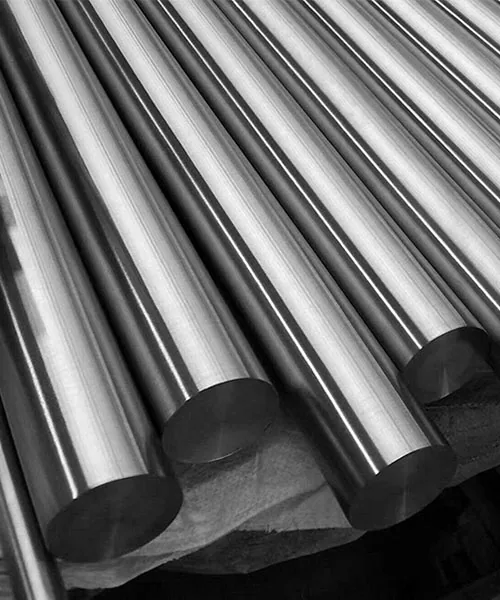
Stainless Steel 316Ti round bar (UNS S31635, EN 1.4571) is a titanium-stabilized, molybdenum-bearing austenitic stainless steel bar. The titanium addition helps limit chromium-carbide precipitation under certain thermal exposures, while molybdenum contributes to resistance against localized corrosion. The grade is specified for selected fabricated, machined and heat-exposed industrial components.
Material selection must account for exposure temperature, corrosive medium, welding conditions, bar size and the specified product standard. Piyush Steel India can review enquiries with the required grade, diameter, condition, tolerance, testing and destination; confirm stock and delivery during quotation.
At a glance
Grade identification is not a substitute for the governing purchase standard or material test report.
Material overview
316Ti round bar is a solid cylindrical form of the 316 stainless steel family with titanium added for stabilization. Titanium preferentially combines with carbon, which can reduce the formation of chromium carbides during certain exposures to elevated temperatures. This is relevant to sensitization and intergranular-corrosion considerations after fabrication or heat exposure.
The grade retains the chromium-nickel-molybdenum chemistry associated with 316-type stainless steels. It is not automatically suitable for every seawater, acid or high-temperature environment: chloride concentration, temperature, oxygen, stress and fabrication history all affect service performance. Its required strength and testing must be specified separately.
Buyer selection guide
A precise enquiry helps determine whether the requested grade and bar condition can be supplied in accordance with the drawing and inspection plan.
Dimensions and product standards
The original product information references diameters from 10 to 800 mm across several standards and lengths including 3 m, 6 m and 12 m. These are enquiry reference ranges, not confirmed stock, universal tolerance ranges or guaranteed offerings. Grade, manufacturing route and achievable length must be checked for the requested size.
| Parameter | What to specify |
|---|---|
| Grade | SS 316Ti / UNS S31635 or EN 1.4571 |
| Product specification | ASTM A276, ASTM A479 or applicable EN standard, with required edition |
| Diameter and length | Drawing dimensions, ordered length and quantity; confirm availability |
| Supply condition | Heat treatment, delivery condition, straightness and end condition |
| Surface finish | Hot-finished, bright, peeled, ground or polished as specified and available |
| Inspection | Chemical analysis, mechanical tests, heat traceability and MTC as required |
Where the component drawing calls for another cross-section or manufacturing condition, compare the relevant pages for hex bars, square bars, bright bars and forged bars. These are product-form references; SS 316Ti availability in each form requires a separate check.
Chemical composition
Source-page reference values by mass (%)
Chromium, nickel and molybdenum form the basis of 316-type corrosion resistance. Titanium stabilization is additionally controlled by the applicable grade specification. Some titanium limits are tied to carbon and/or nitrogen content rather than a fixed universal range.
| Element | Reference value (%) |
|---|---|
| Carbon (C) | 0.08 maximum |
| Chromium (Cr) | 16.00–18.00 |
| Nickel (Ni) | 10.00–14.00 |
| Molybdenum (Mo) | 2.00–3.00 |
| Titanium (Ti) | Original page: 0.60–1.00 (verify; actual limits may use a carbon/nitrogen-based formula) |
| Manganese (Mn) | 2.00 maximum |
| Silicon (Si) | 0.75 maximum |
| Phosphorus (P) | 0.045 maximum |
| Sulfur (S) | 0.030 maximum |
Technical verification required: These are figures from the supplied page, not an independently certified specification. In particular, validate titanium, silicon and other limits against the exact ASTM or EN edition and the MTC before publication or purchase.
Mechanical properties
Mechanical requirements vary with product standard, cross-section, solution-annealed or other condition, and testing method. The figures below reproduce the original page's reference values for comparison, without claiming they apply to every bar.
| Property | Source-page reference | Interpretation |
|---|---|---|
| 0.2% yield strength | 205 MPa | Original page lists as minimum; check edition and condition |
| Tensile strength | 515 MPa | Original page lists as minimum; verify specification |
| Elongation | 30% | Original page lists as minimum; confirm specimen conditions |
| Reduction of area | 40% | Original page lists as minimum; confirm applicable test requirement |
| Brinell hardness | 237 (original figure) | Verify maximum hardness and HBW units under the governing standard |
| Elastic modulus | 193 GPa | Indicative room-temperature physical property, not a universal acceptance limit |
The original page incorrectly labeled hardness as “NACE MR0175.” A Brinell hardness value alone does not establish compliance with a sour-service standard.
Material designations
| Designation system | Grade / material reference |
|---|---|
| UNS | S31635 |
| EN / DIN | 1.4571 / X6CrNiMoTi17-12-2 |
| ASTM bar specifications | ASTM A276 and ASTM A479 (verify grade coverage and edition) |
| JIS designation | The uploaded page references “SUS 316Ti” / “SUS 316T”; verify the exact applicable JIS grade and standard rather than assuming equivalence |
Cross-reference designations do not establish automatic substitution. Chemical limits, product form, mechanical properties, heat treatment and certification requirements must all be checked.
Industrial applications
Typical specified components include machined parts and fabricated hardware in systems that require both corrosion resistance and consideration of elevated-temperature exposure. Suitability depends on the environment and governing design specification.
Machined valve parts, supports and equipment components where process chemistry and temperature permit use of 316Ti.
Hardware, fittings and supporting components subjected to specified thermal cycles; detailed temperature limits require design review.
Machined parts for selected processing environments with documented corrosion and material requirements.
Fasteners, shafts, studs and fabricated items when stabilization and the required bar properties are relevant.
Selected fittings or components following review of chloride concentration, crevice conditions and service temperature.
Components subject to hygiene, cleaning-chemical and material acceptance requirements; grade selection depends on service.
Before ordering
Check whether the specified grade and MTC meet the titanium stabilization requirement. The original titanium range should not be treated as a universal certified limit.
Stabilization does not make the steel immune to pitting, crevice corrosion or stress corrosion cracking. Assess real exposure conditions.
Confirm heat treatment, diameter, finish, applicable mechanical tests and any elevated-temperature design data.
Include the required heat number, marking, material certificate, inspection criteria and acceptance documentation in the order.
Product questions
It is a round bar made from titanium-stabilized, molybdenum-bearing austenitic stainless steel, commonly identified as UNS S31635 or EN 1.4571. Confirm the required grade and product standard when ordering.
Titanium helps tie up carbon and reduce chromium-carbide formation during certain elevated-temperature exposures. This is relevant to sensitization and intergranular corrosion, but it does not eliminate every corrosion risk.
316L is a low-carbon variant; 316Ti uses titanium stabilization; and 316H has a higher-carbon specification aimed at certain elevated-temperature requirements. The drawing and governing specification determine the appropriate grade.
Buyers may reference ASTM A276, ASTM A479 or a relevant EN bar standard. The exact edition, grade coverage, properties and inspection requirements must be confirmed.
Not automatically. Chloride content, crevices, stress, temperature and exposure duration affect suitability. Ask your engineer to assess the service and the applicable design standard.
Send the grade and standard, diameter, length, quantity, condition, finish, tolerances, MTC or other testing needs, delivery location and requested schedule. Availability is confirmed during quotation.
Specification-led enquiries
Include the governing standard, dimensions, quantity, condition, testing requirements, documentation, and destination.