
Chloride corrosion
316 is often more resistant to localized chloride corrosion than 304, but not immune. Confirm salt exposure, temperature and crevice conditions.
Stainless Steel Round Bar · Grade 316
Stainless Steel 316 round bar is a molybdenum-bearing austenitic chromium-nickel stainless steel, designated UNS S31600 (EN 1.4401). Its molybdenum addition improves resistance to localized corrosion in many chloride-containing environments compared with Grade 304, although suitability still depends on exposure and design.
Piyush Steel India handles enquiries for SS 316 bars for machining and industrial fabrication. Specify the standard, diameter, length, supply condition, finish and required test documentation to obtain an accurate quotation.
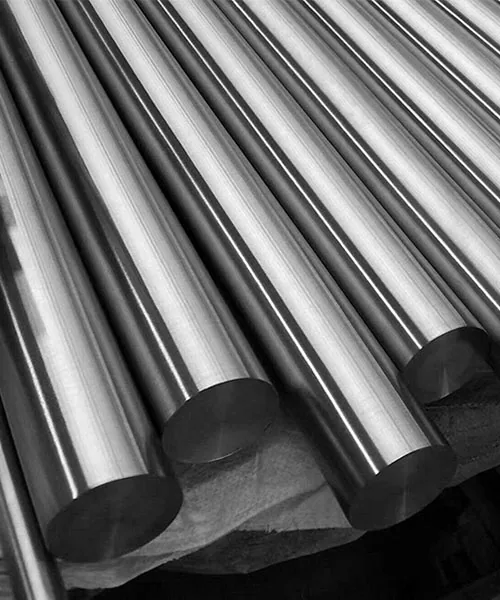
At a glance
Size, condition, finish and availability are subject to confirmation for each enquiry.
Material overview
SS 316 round bar is solid cylindrical stock used to machine or fabricate shafts, fasteners, fittings and other components. Grade 316 contains chromium and nickel for austenitic stainless-steel behavior, with approximately 2–3% molybdenum as an important distinguishing alloy addition.
Molybdenum improves pitting and crevice-corrosion resistance in many chloride exposures relative to SS 304 round bar. It does not make 316 immune to seawater corrosion, stress-corrosion cracking or chemical attack. Exposure concentration, temperature, surface finish and equipment design all matter.
For welded assemblies, a low-carbon alternative may be specified; compare SS 316L round bar against the governing welding or project requirements.
Buyer selection guide
The grade name identifies the alloy, but a purchase order must also state the governing standard, dimensions and acceptance criteria. Confirm the following details with your technical team.
Industrial uses
Machined and fabricated Grade 316 bar components may be used in the following applications where the service conditions and specifications permit:
Product certification and project approval should be checked before selecting 316 for pressure-containing, safety-critical or highly aggressive service.
Specifications
| Requirement | Information for an enquiry |
|---|---|
| Grade | 316 / UNS S31600 |
| Referenced bar standards | ASTM A276, ASTM A479, EN 10088-3, JIS G4303 (as applicable) |
| Round-bar diameter | Original page lists 3–500 mm as a reference range; confirm actual supply by size and condition |
| Cut lengths | Original page lists 1,000–6,000 mm as reference lengths; confirm availability |
| Finishes | Hot-finished, cold-finished, ground or polished, depending on order requirements |
| Inspection documents | Specify test report/MTC requirements, heat traceability and inspection needs |
No single dimensional tolerance applies to every diameter or process. Specify the applicable bar standard or purchase drawing instead of relying on the original page's blanket tolerances.
Where a drawing calls for another section, see our hex bar, square bar, bright bar and forged bar pages. Availability of Grade 316 in any particular form must be confirmed separately.
Chemical composition
The table reproduces typical Grade 316 composition limits from the original product information. Percentage values are by mass; the applicable standard and edition control purchase acceptance.
| Element | Composition (%) |
|---|---|
| Carbon (C) | 0.08 max |
| Manganese (Mn) | 2.00 max |
| Phosphorus (P) | 0.045 max |
| Sulfur (S) | 0.030 max |
| Silicon (Si) | 1.00 max |
| Chromium (Cr) | 16.00–18.00 |
| Nickel (Ni) | 10.00–14.00 |
| Molybdenum (Mo) | 2.00–3.00 |
| Iron (Fe) | Balance |
The molybdenum content is particularly relevant when comparing 316 with 304, but suitability for chloride exposure still requires engineering assessment.
Mechanical properties
Reference values below come from the supplied page and are not a certified test result. Required minimums, maximums and test methods depend on standard, diameter and supplied condition.
| Property | Original reference figure | How to use |
|---|---|---|
| Tensile strength | 515 MPa | Verify applicable minimum for the supplied condition |
| Yield strength | 205 MPa | Verify proof-stress definition and acceptance requirement |
| Elongation | 30% | Check gauge length and minimum requirement |
| Reduction of area | 40% | Confirm if specified and required |
| Hardness | 237 HBW | Check applicable maximum and condition |
| Density | Approx. 8.0 g/cm³ | Typical physical property, not a test certificate |
| Elastic modulus | Approx. 193 GPa | Typical room-temperature value |
Do not treat these reference figures as guaranteed performance or as design allowables without the governing product standard and MTC.
Technical considerations
316 is often more resistant to localized chloride corrosion than 304, but not immune. Confirm salt exposure, temperature and crevice conditions.
For welded assemblies, assess whether lower-carbon Grade 316L is required by the applicable fabrication procedure.
Specify diameter, straightness, surface, heat-treatment condition and machining allowance for the intended operation.
Agree heat identification, certified chemical and mechanical tests, marking and third-party inspection before dispatch.
Grade designations
These references help identify Grade 316 under different national systems; they are not automatic permission to substitute one product standard for another.
| System / standard | Designation |
|---|---|
| UNS / ASTM A276 or A479 | S31600 / Grade 316 |
| EN 10088-3 | 1.4401 / X5CrNiMo17-12-2 |
| JIS G4303 | SUS 316 |
For alternate requirements, compare 316L, 316H and 316Ti against the actual drawing and material specification.
Common product questions
SS 316 round bar is used to machine shafts, fasteners, valve parts, fittings and fabrication components where the project specification requires a corrosion-resistant austenitic stainless steel.
Grade 316 contains molybdenum, which generally improves pitting and crevice-corrosion resistance in many chloride-containing environments compared with 304. Neither material is immune to corrosion, so application conditions must be checked.
The UNS designation is S31600. Other references include EN 1.4401 and SUS 316, subject to the applicable product standard.
Typical composition contains 16–18% chromium, 10–14% nickel and 2–3% molybdenum. Mechanical limits vary with condition and standard; refer to the tables above and verify requirements against the MTC.
316 has improved resistance to many chloride exposures compared with 304, but it can still pit or crevice-corrode in seawater, especially at elevated temperatures or in stagnant conditions. A service-specific materials assessment is needed.
Send grade 316 / UNS S31600, the bar standard, diameter, length, quantity, finish, condition, tolerances, required tests or MTC, and delivery destination. Availability and price can then be confirmed.
Specification-led enquiries
Include the governing standard, dimensions, quantity, condition, testing requirements, documentation, and destination.