
Chloride service
Molybdenum can improve resistance to localized corrosion, but pitting, crevice corrosion and chloride stress-corrosion cracking remain possible. Check operating concentration and temperature.
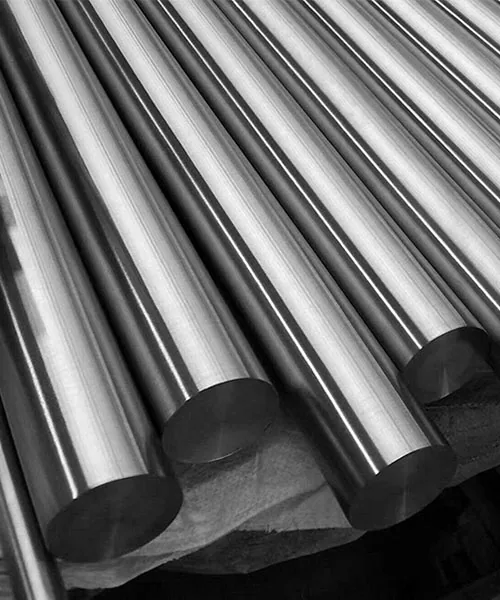
Stainless Steel Round Bar
Stainless Steel 317 Round Bar (UNS S31700) is a molybdenum-bearing austenitic stainless steel bar used for machined and fabricated components where corrosion resistance is important. Compared with Grade 316, its higher molybdenum content can provide improved resistance to localized corrosion in some environments.
Piyush Steel India handles enquiries for SS 317 round bars by grade, diameter, length, finish, material standard and inspection requirements. Availability and suitability should be checked for each order.
At a glance
Specified chemistry, properties and test documentation depend on the standard edition and product condition.
Grade overview
Grade 317 is an austenitic chromium-nickel-molybdenum stainless steel. Its nominal molybdenum range is higher than that of conventional Grade 316, which can help improve resistance to pitting and crevice corrosion in certain chloride-bearing and chemical-process environments. It is not immune to chloride corrosion or stress-corrosion cracking.
SS 317 round bar is a solid cylindrical product used to make shafts, valve parts, fittings, fasteners and other machined components. The bar grade does not by itself determine suitability: service chemistry, temperature, stress, finish and fabrication method must also be considered.
Buyers often compare Grade 317 with SS 316 Round Bar for corrosion requirements or SS 317L Round Bar when lower carbon content is preferred for welded assemblies.
Buyer selection guide
For procurement, identify the exact grade and product standard rather than ordering solely by an equivalent designation.
Industrial uses
Grade 317 is selected for components in environments where corrosion performance is a major material-selection factor. Typical application categories include:
For seawater immersion, highly concentrated chlorides or strongly reducing chemicals, separate corrosion testing or another alloy may be required. Grade 317 should not be assumed suitable solely because it is stainless steel.
Sizes and standards
Product form, finish and machining requirements affect the applicable tolerances and inspection criteria. The following forms are described in the original product information; availability for SS 317 should be confirmed before ordering.
| Form | Description |
|---|---|
| Stainless Steel Round Bar | Cylindrical bars are used in shafts, fasteners, and other critical machine components. |
| Stainless Steel Square Bar | Ideal for structural applications, these bars ensure uniform strength and reliability. |
| Stainless Steel Hollow Bar | Lightweight yet robust, it is used in applications where reduced weight and durability are required. |
| Stainless Steel Hex Bar | Hexagonal bars are suitable for high-strength applications like bolts and precision machining. |
| Stainless Steel Bright Bar | Polished bars with excellent surface finishes are used in aesthetic and precise industrial applications. |
| Stainless Steel Forged Bar | Forged bars provide superior mechanical strength for heavy-duty industrial usage. |
Source-listed indicative size information: The original page references diameters of 5–500 mm, lengths up to 6 metres, and bright, black or polished finishes. These are not verified stock commitments and do not imply that every size or finish is supplied under each standard.
| Property | Details |
|---|---|
| Diameter | 5mm to 500mm |
| Length | Up to 6 meters |
| Surface Finish | Bright, Black, or Polished |
| Standards Followed | ASTM A276, A479 |
ASTM A276 and ASTM A479 are bar-related specifications commonly referenced for this grade. Confirm the exact edition, size limitations, processing condition and acceptance requirements on the purchase order.
Chemical composition
The chromium, nickel and molybdenum combination contributes to the alloy's corrosion performance. The following figures are reproduced from the supplied source table for reference.
| Element | % Composition |
|---|---|
| Chromium | 18.0 – 20.0 |
| Nickel | 11.0 – 15.0 |
| Molybdenum | 3.0 – 4.0 |
| Carbon | Max 0.08 |
| Manganese | Max 2.0 |
| Silicon | Max 1.0 |
| Phosphorus | Max 0.045 |
| Sulfur | Max 0.03 |
Values are indicative and must be checked against the exact applicable standard and edition. Maximum values should not be interpreted as fixed chemical contents. The material test certificate should give the actual heat analysis.
Mechanical properties
Strength and ductility depend on processing condition, bar size, test direction and the applicable standard. These values are retained from the original page and should not be treated as universal guaranteed minima.
| Property | Value |
|---|---|
| Tensile Strength | 515 MPa (Min) |
| Yield Strength | 205 MPa (Min) |
| Elongation | 30% (Min) |
| Area of reduction | 40% (Min) |
| Hardness (HBW) | Max 217 |
Confirm whether each value is a required minimum, maximum or illustrative value for the ordered condition. For design, rely on the governing material specification and certified test results.
Engineering considerations
Molybdenum can improve resistance to localized corrosion, but pitting, crevice corrosion and chloride stress-corrosion cracking remain possible. Check operating concentration and temperature.
Welding procedures and post-fabrication corrosion needs should be evaluated. The low-carbon 317L grade may be worth comparing where sensitization is a concern.
Austenitic stainless steel can work-harden during machining. Select appropriate tools, cutting conditions and machining allowance.
Specify heat identification, chemical analysis, mechanical testing and material certification based on project requirements.
Grade identification
UNS S31700 is the primary designation used for the Grade 317 material discussed here. Cross-standard designations in the original page are shown for reference, not as automatic substitution approvals.
| Standard | Grade |
|---|---|
| ASTM A276/A479 | UNS S31700 |
| EN 10088-3 | 1.4449 |
| JIS G4303 | SUS 317 |
| EN 10088-3 | X6CrNiMo18-12-3 |
Correction: DIN/EN 1.4404 belongs to Grade 316L, not SS 317, so it has been removed from this page's SEO title. For an SS 317 order, confirm the required UNS designation and check all relevant chemistry and mechanical limits before accepting a cross-standard grade.
Related materials: SS 316 Round Bar, SS 317L Round Bar and SS 904L Round Bar. These grades are not direct substitutes without engineering review.
Quotations
For a useful quotation, provide the required grade, diameter, bar length, total quantity, standard and edition, finish, delivery location and desired schedule. Add requirements for PMI, ultrasonic testing, heat traceability and third-party inspection if applicable.
Material identification may include heat number, grade and size according to the supply agreement; marking and certification requirements should be established before dispatch. Send your SS 317 requirement for a quotation.
Product questions
SS 317 round bar is used to machine corrosion-resistant industrial components such as shafts, valve parts, fasteners and fittings, subject to the actual service environment.
SS 317 typically has more molybdenum than conventional SS 316, which can improve localized corrosion resistance in certain conditions. Compare the specifications for SS 316 Round Bar.
317L is a lower-carbon variant often considered where welding and sensitization resistance matter. Check SS 317L Round Bar and the project material standard.
ASTM A276 and ASTM A479 are commonly referenced bar standards. Specify the exact edition, UNS S31700 and applicable condition; equivalent grades require verification.
Do not assume SS 317 is suitable for continuous seawater immersion. Localized corrosion risk depends on chloride concentration, temperature, crevices and exposure conditions.
Share diameter, length, quantity, material standard, supply condition, finish, required test reports or inspection, and destination.
Specification-led enquiries
Include the governing standard, dimensions, quantity, condition, testing requirements, documentation, and destination.