
Standard and edition
Confirm the controlling document; a grade name or cross-reference alone is not a complete acceptance specification.
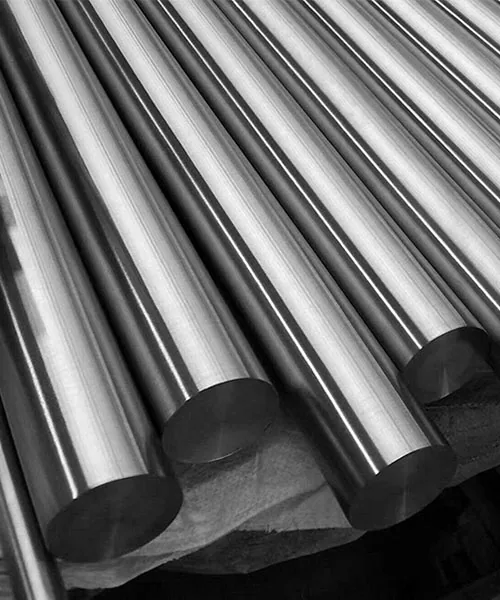
Stainless Steel Round Bar
Stainless Steel 317L Round Bar (UNS S31703) is a low-carbon, molybdenum-bearing austenitic stainless steel bar for corrosion-resistant industrial components. Its combination of chromium, nickel and molybdenum supports resistance to localized corrosion in selected chemical and chloride-bearing environments, while the low carbon content helps limit sensitization during welding.
Piyush Steel India supplies SS 317L bar enquiries against the specified diameter, length, finish, product standard, testing and documentation. Size and supply condition are subject to confirmation.
At a glance
Material requirements, grade cross-references and availability must be confirmed against the specified standard and ordered condition.
Material overview
SS 317L round bar is the low-carbon form of grade 317 stainless steel. It is commonly identified as UNS S31703 and is a chromium-nickel-molybdenum austenitic alloy. Molybdenum contributes to resistance against pitting and crevice corrosion under suitable conditions, and the restricted carbon content helps reduce chromium-carbide precipitation associated with welding or thermal exposure.
Typical uses include machined components for chemical processing, pulp and paper equipment, pumps, valves and selected heat-exchanger assemblies. The material is not immune to corrosion: chloride concentration, temperature, crevices, applied stress and fabrication details all affect suitability.
For grade comparisons, see Stainless Steel 317 Round Bar, Stainless Steel 316L Round Bar and Stainless Steel 904L Round Bar.
Choose the grade and product specification based on service environment, design requirements and final fabrication. For corrosion-critical service, review chloride concentration, temperature, cleaning chemicals and any welding or heat exposure before selecting SS 317L.
Begin with the drawing, equipment specification, or governing code. The product name identifies the material route; acceptance depends on the complete purchase specification.
Common applications
SS 317L round bars are used where a combination of corrosion resistance, fabrication characteristics and machinable bar stock is required. Final material selection depends on operating temperature, chemical concentration and the applicable design code.
SS 317L is not automatically suitable for all seawater, sour-service or stress-corrosion environments. Check actual process conditions and the governing specification.
Round bar is the main product on this page. Other bar shapes and processing finishes can be discussed for specific orders; their availability is not guaranteed by the table below.
To cope with the numerous requirements of commercial programs, we offer SS 317L Round Bars in multiple forms:
| Form | Description |
|---|---|
| Stainless Steel Round Bar | Cylindrical bars are used for shafts, fasteners, and structural components. |
| Stainless Steel Square Bar | Square-shaped bars are ideal for frames and structural applications requiring uniform strength. |
| Stainless Steel Hollow Bar | Hollow bars are used in lightweight yet durable applications like fluid transfer systems. |
| Stainless Steel Hex Bar | Hexagonal bars are widely used in precision machining and fastener manufacturing. |
| Stainless Steel Bright Bar | Polished bars with excellent finish, used in aesthetic and high-precision industrial applications. |
| Stainless Steel Forged Bar | Forged bars for heavy-duty applications requiring superior mechanical strength. |
| Property | Details |
|---|---|
| 5–500 mm (reference enquiry range) | 5–500 mm (confirm availability) |
| Length | Up to 6 m (confirm by size) |
| Surface Finish | Bright, Black, or Polished |
| Standards Followed | ASTM A276 / ASTM A479, if specified and applicable |
All diameters, lengths, forms and finishes shown are enquiry references, not a live-stock guarantee. Confirm tolerance and supply condition for each diameter.
Chemical composition
The original composition ranges below are retained as reference information. Check them against the agreed edition of the governing material standard and the supplied mill test certificate; actual heat chemistry must meet the ordered requirements.
| Element | % Composition |
|---|---|
| Chromium | 18.0 – 20.0 |
| Nickel | 11.0 – 15.0 |
| Molybdenum | 3.0 – 4.0 |
| Carbon | Max 0.03 |
| Manganese | Max 2.0 |
| Silicon | Max 1.0 |
| Phosphorus | Max 0.045 |
| Sulfur | Max 0.03 |
All values are mass percent. The low-carbon grade is distinguished by its maximum carbon requirement; alloy limits must be checked for the applicable specification.
Mechanical properties
Original page reference values are shown below. They are not a guarantee for every size, bar condition or standard. Verify tensile requirements, test method and hardness limits against the purchase specification and MTC.
| Property | Value |
|---|---|
| Tensile Strength | 515 MPa (Min) |
| Yield Strength | 205 MPa (Min) |
| Elongation | 30% (Min) |
| Area of reduction | 40% (Min) |
| Hardness (HBW) | Max 237 |
Mechanical values depend on product specification, size and supply condition. The stated reduction-of-area and hardness figures should not be treated as universal acceptance limits.
Technical considerations
Confirm the controlling document; a grade name or cross-reference alone is not a complete acceptance specification.
Check that property values apply to the required diameter, heat treatment, test direction and temperature.
State tolerances, straightness, length, surface finish, machining allowance, and end condition where required.
Define inspection, test reports, marking, heat identification, third-party requirements, and destination documentation.
Equivalent grades
| Standard | Grade |
|---|---|
| ASTM A276/A479 | UNS S31703 |
| EN 10088-3 | 1.4438 |
| JIS G4303 | SUS 317L |
| EN 10088-3 | X2CrNiMo18-15-4 |
UNS, EN and JIS designations are comparison references rather than proof of automatic interchangeability. Confirm chemical limits, mechanical requirements and product form before substitution.
Inspection and documentation
For traceable industrial supply, confirm how the manufacturer identifies the grade, heat number, size, product standard and supply condition. Marking on short or finished pieces may differ from marking on full-length bars; any additional requirements should appear on the purchase order.
Ask for the required inspection certificate, such as EN 10204 Type 3.1 when specified, together with the material heat chemistry, applicable mechanical test results and any agreed supplementary tests. Certificates and test scope depend on the order.
Product questions
SS 317L round bar is a low-carbon, molybdenum-bearing austenitic stainless steel generally identified as UNS S31703. It is used to machine corrosion-resistant industrial components.
317L has a lower maximum carbon content than conventional 317. This helps reduce susceptibility to sensitization during welding or certain thermal exposures. Compare the material requirements for SS 317 Round Bar before selecting a grade.
Common references include UNS S31703, EN 1.4438 and JIS SUS 317L. ASTM A276 or ASTM A479 may be applicable to bar products, subject to the specified edition and purchase requirements.
Its molybdenum content improves resistance to pitting and crevice corrosion in some aggressive environments. Suitability still depends on temperature, chloride concentration, fabrication and the actual process conditions.
Diameter, length, surface finish and tolerance depend on the requested supply condition. Submit your exact size and finish requirements so the supplier can confirm availability and specifications.
Specify UNS S31703 or the required designation, governing bar standard and edition, diameter, length, quantity, supply condition, tests, certificate type and destination.
Specification-led enquiries
Include the governing standard, dimensions, quantity, condition, testing requirements, documentation, and destination.