
Duplex Steel SAF 2205 Round Bar
Review dimensions, condition and technical requirements for Duplex Steel SAF 2205 Round Bar.
View productManufacturer · Exporter · Supplier
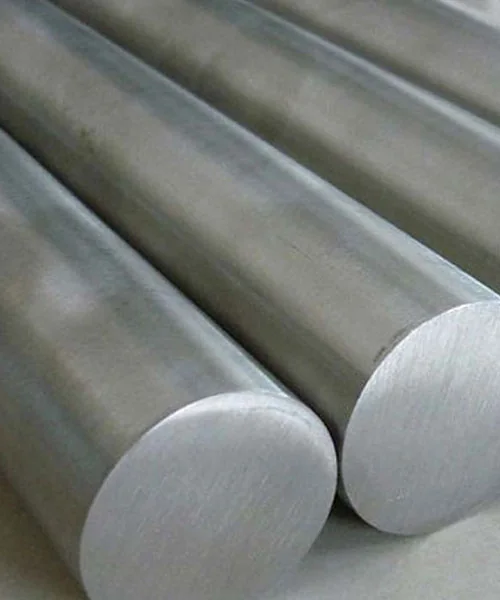
Duplex stainless steel round bars contain both ferrite and austenite in their microstructure. This combination provides high mechanical strength and resistance to several forms of corrosion. Duplex grades are used for shafts, fasteners, valve parts and machined equipment components where material strength and corrosion performance are important.
Common grades include 2205 (UNS S31803 and S32205) and UNS S32900. Their suitability depends on the service environment, operating temperature, product standard and supply condition.
Product discovery
Compare 4 products below, then send your grade and size requirements.
Review dimensions, condition and technical requirements for Duplex Steel SAF 2205 Round Bar.
View productReview dimensions, condition and technical requirements for Duplex Steel UNS S31803 Round Bar.
View productReview dimensions, condition and technical requirements for Duplex Steel UNS S32205 Round Bar.
View productReview dimensions, condition and technical requirements for Duplex Steel UNS S32900 Round Bar.
View productNo matching product is shown. Check the spelling or send the governing designation with your enquiry.
Category selection guide
Choose the product record that matches the grade or designation in the governing document. Then confirm the product standard, size, condition, finish, tolerance, testing, and documentation instead of relying on the category name alone.
Material and technical information
Duplex stainless steel is different from ordinary austenitic stainless steel because its structure contains two phases: ferrite and austenite. In the correctly heat-treated condition, this structure offers higher yield strength than common 304 and 316 grades, together with useful resistance to chloride stress corrosion cracking. Actual performance depends on the grade, environment and processing history.
The product directory on this page contains four grade references. SAF 2205 is a trade designation associated with the 2205 family; UNS S31803 and S32205 are separate chemical-composition designations. S32205 has tighter chromium, molybdenum and nitrogen ranges. UNS S32900 is another duplex grade and should not be treated as identical to 2205.
| Grade / designation | Type and selection note |
|---|---|
| SAF 2205 | Common name for duplex 2205; check the specified UNS designation on the material certificate |
| UNS S31803 | 22% chromium duplex grade with combined strength and corrosion resistance |
| UNS S32205 | 2205 duplex grade with tighter alloying-element limits for corrosion-performance consistency |
| UNS S32900 | Separate duplex grade; confirm its chemistry, heat treatment and properties against the applicable specification |
ASTM A276/A276M is commonly specified for stainless steel bars and shapes, while ASTM A479/A479M may apply to bars for boiler and pressure-vessel use. The applicable standard must be checked for the selected grade and intended service. A general grade name alone is not a complete material specification.
| Specification item | Technical information |
|---|---|
| Product form | Solid round bar or rod |
| Common references | SAF 2205, UNS S31803, UNS S32205 and UNS S32900 |
| Bar specifications | ASTM A276/A276M; ASTM A479/A479M where applicable |
| Material condition | Solution annealed and properly cooled, or other permitted specified condition |
| Finish | Hot worked, peeled, turned, ground or polished as ordered |
| Dimensions | Diameter, length, tolerance and straightness to the order requirements |
| Documentation | Chemical and mechanical test records, dimensional reports and traceability as specified |
Chromium supports the protective surface film, molybdenum improves resistance to localized corrosion, and nitrogen contributes to strength and pitting resistance. Nickel helps maintain the austenitic portion of the structure. Chemical composition ranges differ between UNS designations.
For 2205 grades, the nominal chromium content is around 22%, with nickel, molybdenum and nitrogen controlled by the specification. Compare the mill certificate against the applicable standard rather than relying on a single nominal composition value.
| Property | Practical meaning |
|---|---|
| Higher yield strength | Useful where component loading and permissible section size are important |
| Corrosion resistance | 2205 grades have useful resistance to pitting and crevice corrosion in many chloride-containing services |
| Stress corrosion cracking | Generally better chloride stress-corrosion-cracking resistance than common austenitic 304/316 grades under comparable conditions |
| Magnetic response | Duplex stainless steel is generally magnetic because it contains ferrite |
| Weldability | Welding procedures must control heat input and phase balance |
| Temperature limitations | Prolonged high-temperature exposure can affect toughness and corrosion resistance; verify service limits for the chosen grade |
Round bars are commonly machined into shafts, bolts, valve stems, pump parts, connectors and other components. The material is considered in oil and gas systems, chemical processing, pulp and paper equipment, marine equipment and water-treatment installations. Selection must account for chloride concentration, temperature, loading and the governing engineering code.
| Industry or equipment | Examples of round-bar components |
|---|---|
| Chemical processing | Valve stems, fasteners and machined fittings |
| Marine and water treatment | Pump shafts and corrosion-resistant mechanical parts |
| Oil and gas | Selected connector, valve and equipment components |
| Pulp and paper | Shafts and fittings used around aggressive process streams |
| General engineering | High-strength pins, machine parts and bolting |
Duplex bars may be hot rolled or forged and then processed to the required dimensions. Solution annealing and suitable cooling help control the microstructure and minimize unwanted secondary phases. Peeling, turning or grinding may be used for tighter diameters and improved surface condition. The final condition must meet the material standard and purchase order.
For related product forms, see Hot Rolled Round Bars and Forged Bars.
Inspection may include chemical analysis, tensile testing, hardness measurement, dimensional checks and material identification. Depending on the grade, service and project standard, additional examination for harmful intermetallic phases or corrosion performance may be specified. Material certificates should identify the heat number and the applicable UNS grade.
Check the exact UNS designation, governing specification, bar diameter, length, solution-annealed condition, surface finish and inspection requirements. Do not assume that SAF 2205, S31803 and S32205 are automatically interchangeable for every project. Where severe chloride exposure or higher corrosion resistance is required, compare the service requirements with the separate Super Duplex Steel Round Bar category.
Common technical questions
No. Duplex steel contains both ferrite and austenite and generally has higher yield strength. Its corrosion behavior also differs from 316, so selection must be based on service conditions.
They belong to the 2205 family but have different composition limits. S32205 specifies tighter ranges for certain alloying elements. Confirm the exact grade required by the design.
Yes. Duplex stainless steel normally shows a magnetic response because ferrite is present in its structure.
ASTM A276/A276M is commonly used for stainless steel bars. ASTM A479/A479M may be relevant for pressure-service applications. Check the chosen grade and standard edition.
Yes, with suitable machining methods and qualified welding procedures. Fabrication practices must control heat input and preserve the required microstructure.
State the UNS grade, standard and edition, bar diameter and length, supply condition, finish, tolerance, quantity and required testing and traceability.
Specification-led enquiries
Send the grade or standard, dimensions, quantity, condition, testing requirements, documentation, and destination.