
Titanium Gr.1 Round Bar
Review dimensions, condition and technical requirements for Titanium Gr.1 Round Bar.
View productManufacturer · Exporter · Supplier
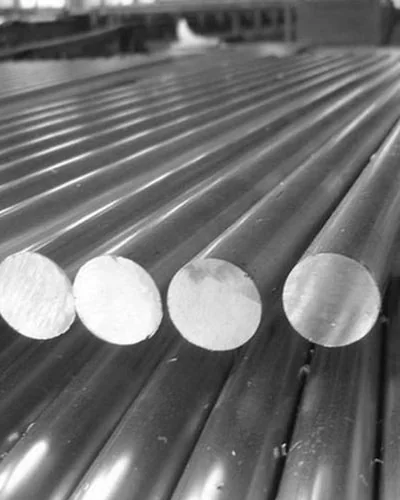
Titanium round bars are solid cylindrical bars used for shafts, fasteners, fittings and other machined components. Commercially pure titanium grades are commonly selected for corrosion resistance and formability, while titanium alloys such as Grade 5 offer higher strength. The appropriate grade, diameter, surface finish and material condition depend on the intended application and relevant specification.
Product discovery
Compare 5 products below, then send your grade and size requirements.
Review dimensions, condition and technical requirements for Titanium Gr.1 Round Bar.
View productReview dimensions, condition and technical requirements for Titanium Gr.2 Round Bar.
View productReview dimensions, condition and technical requirements for Titanium Gr.3 Round Bar.
View productReview dimensions, condition and technical requirements for Titanium Gr.4 Round Bar.
View productReview dimensions, condition and technical requirements for Titanium Gr.5 Round Bar.
View productNo matching product is shown. Check the spelling or send the governing designation with your enquiry.
Category selection guide
Choose the product record that matches the grade or designation in the governing document. Then confirm the product standard, size, condition, finish, tolerance, testing, and documentation instead of relying on the category name alone.
Material and product information
Titanium Round Bars are solid cylindrical bars made from commercially pure titanium or titanium alloys. They are used for manufacturing shafts, fasteners, fittings, machine components and other industrial parts where corrosion resistance, mechanical strength and low weight are important.
Titanium has a density of approximately 4.5 g/cm³, making it lighter than conventional stainless steel. It also forms a protective oxide layer that provides good corrosion resistance in many industrial environments, including seawater and certain chemical processing conditions.
Titanium round bars are produced in different material grades, diameters and surface finishes. Each grade has different mechanical properties and is selected according to the intended application, operating conditions and required material standard.
Titanium round bars are generally divided into commercially pure titanium and titanium alloys. Grades 1 to 4 are commercially pure titanium, while Grade 5 contains aluminium and vanadium to provide increased mechanical strength.
| Titanium Grade | UNS Designation | Material Characteristics |
|---|---|---|
| Titanium Grade 1 Round Bar | R50250 | High ductility and excellent corrosion resistance |
| Titanium Grade 2 Round Bar | R50400 | Good balance of strength, formability and corrosion resistance |
| Titanium Grade 3 Round Bar | R50550 | Higher strength than Grades 1 and 2 |
| Titanium Grade 4 Round Bar | R50700 | Higher-strength commercially pure titanium |
| Titanium Grade 5 Round Bar | R56400 | Ti-6Al-4V alloy with high strength and a good strength-to-weight ratio |
Commercially pure titanium grades are commonly used for corrosion-resistant components, while titanium alloys are selected for applications requiring higher mechanical strength.
Titanium Round Bars are commonly specified according to ASTM B348/B348M, which covers titanium and titanium alloy bars and billets. Material requirements depend on the grade, dimensions and applicable edition of the standard.
| Specification | Details |
|---|---|
| Product | Titanium Round Bar and Rod |
| Material | Commercially Pure Titanium and Titanium Alloys |
| Common Grades | Grade 1, Grade 2, Grade 3, Grade 4 and Grade 5 |
| Standard | ASTM B348/B348M |
| Related Specification | ASME SB-348, where applicable |
| Manufacturing Process | Hot Rolled, Forged and subsequently finished |
| Surface Finish | Descaled, Peeled, Ground, Polished or Machined |
| Diameter | According to specified grade and manufacturing requirements |
| Length | Production lengths or specified cut lengths |
| Inspection | Chemical Analysis, Tensile Testing and Dimensional Inspection |
The selected grade, material condition, dimensional tolerances and inspection requirements should be confirmed against the relevant material specification.
The chemical composition of titanium round bars varies according to the material grade. Commercially pure titanium grades contain titanium as the main element, with controlled limits for oxygen, iron, nitrogen, carbon and hydrogen.
Grades 1 to 4 have different strength and ductility levels due partly to variations in permitted interstitial elements.
Titanium Grade 5 Round Bar, also known as Ti-6Al-4V, contains approximately 6% aluminium and 4% vanadium. The addition of these alloying elements provides considerably higher mechanical strength than commercially pure titanium grades.
The exact chemical composition should be verified using the relevant material standard and mill test certificate.
Titanium round bars are used in engineering applications because of their combination of physical and mechanical properties.
| Property | Description |
|---|---|
| Density | Approximately 4.5 g/cm³ |
| Corrosion Resistance | Good resistance in many seawater and oxidizing environments |
| Tensile Strength | Depends on the material grade and condition |
| Ductility | Generally higher in commercially pure grades |
| Elastic Modulus | Approximately 100–120 GPa, depending on grade |
| Thermal Conductivity | Relatively low compared with many engineering metals |
| Magnetic Properties | Generally non-magnetic |
| Machinability | Requires suitable cutting tools, cutting speeds and cooling |
For applications requiring good formability and corrosion resistance, Titanium Grade 2 Round Bar is commonly considered. Where higher mechanical strength is required, Grade 5 may be suitable depending on the operating conditions.
Titanium Round Bars are manufactured through processes such as hot rolling and forging, followed by finishing operations to achieve the required dimensions and surface condition.
Hot working is used to form titanium into the required bar shape. Depending on the application, the bars may undergo additional machining, peeling or grinding to improve dimensional accuracy and surface quality.
Some titanium alloys also require controlled heat treatment to obtain the required mechanical properties.
The manufacturing method depends on the material grade, diameter, surface finish and dimensional tolerances.
For further information about rolled bar production, see Hot Rolled Round Bars.
Titanium Round Bars are produced with different finishes according to manufacturing and machining requirements.
| Finish | Description |
|---|---|
| Hot Worked | Surface condition after forging or hot rolling |
| Descaled | Surface scale removed after hot working |
| Peeled | Outer surface layer removed using a machining process |
| Ground | Surface finished to improve dimensional accuracy |
| Polished | Smoother surface produced through mechanical finishing |
| Machined | Material finished to specified dimensions |
Surface finish selection depends on the final component, dimensional tolerance and machining requirements.
For more information about a related product form, see Bright Round Bars.
Titanium Round Bars are used to manufacture mechanical and structural components in industries where corrosion resistance, strength or lower component weight is required.
| Industry | Applications |
|---|---|
| Aerospace | Structural fittings, fasteners and precision-machined components |
| Marine Engineering | Shafts, fittings and seawater-exposed equipment |
| Chemical Processing | Corrosion-resistant fittings and equipment components |
| Oil and Gas | Selected components exposed to demanding service conditions |
| Automotive Engineering | High-performance connecting rods and specialized fasteners |
| Medical Manufacturing | Components made using appropriate certified medical grades |
| General Engineering | Shafts, pins, bolts and precision components |
The required titanium grade depends on the environment and mechanical demands of the application.
Titanium Grade 2 Round Bar and Titanium Grade 5 Round Bar are used for different engineering requirements.
| Property | Titanium Grade 2 | Titanium Grade 5 |
|---|---|---|
| Material Type | Commercially Pure Titanium | Titanium Alloy |
| UNS Designation | R50400 | R56400 |
| Strength | Moderate | High |
| Formability | Generally better | More limited |
| Corrosion Resistance | Excellent in many environments | Good in many environments |
| Common Applications | Chemical processing, marine and industrial components | Aerospace and high-strength engineered components |
Grade 2 is commonly selected where corrosion resistance and formability are important. Grade 5 is generally used where higher strength and a good strength-to-weight ratio are required.
Titanium Round Bars are tested to verify their chemical composition, mechanical properties and dimensional requirements.
Chemical analysis is carried out to confirm the material grade. Tensile testing determines properties such as tensile strength, yield strength and elongation. Dimensional inspection is performed to check the bar diameter, length and tolerances.
Additional testing, including ultrasonic examination, may be specified depending on the application and purchase requirements.
Inspection documents and material traceability should be considered when selecting titanium for critical applications.
Selection of a Titanium Round Bar depends on the required strength, corrosion resistance, operating temperature, manufacturing process and applicable material standard.
Titanium Grade 1 offers high ductility, while Titanium Grade 3 and Titanium Grade 4 provide progressively higher strength among commercially pure grades.
For components requiring high mechanical strength, Titanium Grade 5 may be considered.
A complete material specification should include the titanium grade, UNS designation, applicable ASTM or ASME standard, diameter, length, material condition, dimensional tolerances, surface finish and testing requirements.
ASTM B348/B348M covers titanium and titanium alloy bars and billets. The required grade, dimensions, material condition and applicable edition should be stated in the purchase specification.
Commercially pure titanium grades, such as Grades 1 to 4, are commonly used where corrosion resistance and formability are important. Titanium alloys such as Grade 5 contain additional alloying elements and are selected for higher-strength components.
Yes. Titanium bars can be turned, drilled and machined into shafts, fasteners, fittings and other components. Suitable cutting tools, cooling and controlled machining conditions are important because titanium has relatively low thermal conductivity.
Specify the material grade, diameter, length, quantity and required tolerances. Include the surface finish, supply condition and any machining allowance where applicable. Available sizes depend on the grade and manufacturing route.
Requirements may include chemical analysis, mechanical test results, dimensional inspection and material traceability records. Any additional examinations or certification should be specified with the applicable material standard.
Specification-led enquiries
Send the grade or standard, dimensions, quantity, condition, testing requirements, documentation, and destination.