
Material Grades · Product Forms · Technical Supply
Metal Rods & Steel Rods
Metal rods are solid bar products used as machining stock and components in engineering and industrial equipment. Specify the material grade, diameter, length, delivery condition and surface finish to select a suitable rod for the application.
Rod selection depends on service conditions, strength requirements, corrosion resistance and the intended fabrication or machining process. Round rods can be supplied in different grades and conditions; the applicable standard and product availability must be confirmed for each enquiry.
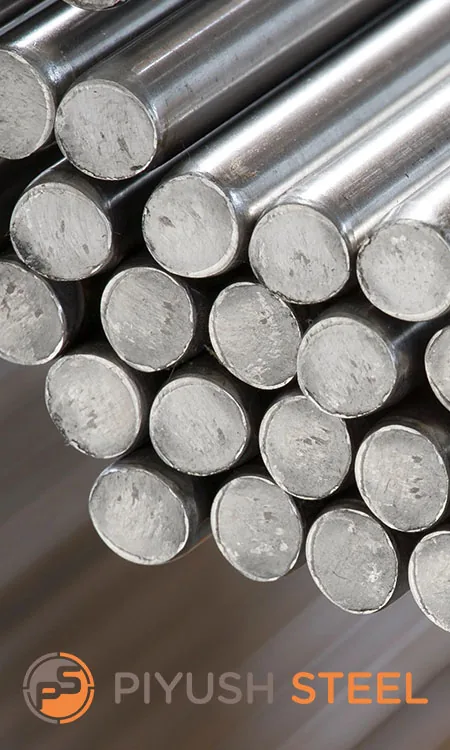
Quick facts
Metal Rod Quick Facts
| Product form | Solid round rods and bar stock |
|---|---|
| Material groups | Carbon steel, alloy steel, stainless steel, nickel alloys, titanium and copper alloys |
| Dimensions | Diameter and cut length; size availability is grade dependent |
| Supply condition | Hot rolled, cold drawn, annealed, heat treated or machined, as applicable |
| Surface finish | Mill finish, bright, peeled, ground or polished, as agreed |
| Documentation | Manufacturer test certificate, inspection reports and traceability as specified |
Product overview
What Is a Metal Rod?
A metal rod is a solid length of metal with a uniform cross-section. In industrial purchasing, the term commonly describes a round section, although terminology can vary between sectors. Rods are used as starting stock for shafts, pins, threaded components, fasteners and other machined parts.
Rod and round bar are often used interchangeably; the drawing and product standard determine the actual requirement. Buyers may also compare round bars, square bars or flat bars when selecting stock geometry.
Material grade, heat treatment and product form have a direct effect on mechanical properties and suitability. A particular finish or manufacturing process should not be assumed solely from the term rod.
Purchasing guidance
How to Specify Metal Rods
Identify the grade and standard first, then provide the diameter, cut length, tolerance, condition, surface finish and quantity. Include any required test documentation, marking and destination details.
Material selection
Material Options for Rods
Different alloys serve different strength, temperature and corrosion requirements. The linked pages describe material families; they do not confirm availability of every alloy in every rod size or condition.
- Stainless steel rods — confirm grade, product form and processing route for the order.
- Carbon steel rods — confirm grade, product form and processing route for the order.
- Alloy steel rods — confirm grade, product form and processing route for the order.
- Duplex stainless steel rods — confirm grade, product form and processing route for the order.
- Super duplex stainless steel rods — confirm grade, product form and processing route for the order.
- Nickel alloys (Inconel / Incoloy) rods — confirm grade, product form and processing route for the order.
- Monel alloys rods — confirm grade, product form and processing route for the order.
- Hastelloy alloys rods — confirm grade, product form and processing route for the order.
- Titanium rods — confirm grade, product form and processing route for the order.
- Copper-nickel alloys rods — confirm grade, product form and processing route for the order.
- Nickel rods — confirm grade, product form and processing route for the order.
- Beryllium copper rods — confirm grade, product form and processing route for the order.
- 253MA rods — confirm grade, product form and processing route for the order.
- AL6XN rods — confirm grade, product form and processing route for the order.
- Custom 450 rods — confirm grade, product form and processing route for the order.
- Jethete M152 rods — confirm grade, product form and processing route for the order.
Technical information
Rod Specifications and Supply Requirements
| Material standard | State the applicable ASTM, ASME, EN, DIN, JIS, AMS or other grade-specific specification and edition. |
|---|---|
| Cross-section | Solid round rod; provide the nominal diameter and permitted deviation. |
| Length | Standard or cut-to-length as confirmed against the order. |
| Condition | Hot rolled, cold drawn, annealed, solution treated, quenched and tempered, or other condition as required by the grade. |
| Finish | Mill finish, peeled, turned, ground, bright or polished, subject to grade and process. |
| Testing | Chemical and mechanical testing to the applicable standard; additional inspection when agreed. |
| Certification | Manufacturer test certificate and heat traceability where required; independent inspection by arrangement. |
| Processing | Cutting or machining to drawing where offered and confirmed at quotation. |
Common Rod Manufacturing and Finishing Routes
| Process / finish | Typical consideration |
|---|---|
| Hot rolled | Common starting stock with as-rolled surface; further finishing may be needed. |
| Cold drawn | Cold-worked stock that may offer improved dimensional control; properties depend on grade and reduction. |
| Peeled or turned | Surface material removed to achieve the specified appearance or diameter. |
| Ground or polished | Additional finishing where tighter surface or dimensional requirements apply. |
Read more about hot rolled bars, cold rolled bars and bright bars when comparing supply conditions.
Industrial uses
Applications of Metal Rods
Rod stock is used to produce pump and valve components, shafts, pins, bolts, studs, threaded parts, machine components and equipment fittings. Material selection must account for the load, environment, temperature and applicable design requirements.
Carbon and alloy steels are often considered for general machinery and structural components, while stainless steel and corrosion-resistant alloys may be chosen for chemical processing, marine or other demanding services. Grade and suitability should be checked for each application.
Orders and logistics
Pricing, Availability and Export Enquiries
Price and delivery depend on grade, diameter, cut length, heat-treatment condition, finish, quantity and test requirements. Send destination, packing instructions and requested delivery date for quotation. Availability is subject to confirmation.
Frequently asked questions
Metal Rod FAQs
What is a metal rod?
A metal rod is a length of solid metal stock, commonly supplied with a round cross-section. Rods are identified by their alloy, diameter, length, condition and applicable material standard.
What is the difference between a rod and a round bar?
The terms often overlap in commercial use. A round bar normally refers to a solid round section, while rod may also describe smaller-diameter stock or feedstock depending on the industry and specification. Confirm dimensions and product standard rather than relying on the name alone.
Which materials are available for industrial rods?
Common options include carbon steel, alloy steel, stainless steel, nickel alloys, copper alloys and titanium. Grade-specific availability, dimensions and manufacturing route should be confirmed before ordering.
How should rod dimensions be specified?
For a round rod, state the diameter and cut length, plus tolerance, straightness, surface condition and quantity. Include drawings or a machining allowance if relevant.
Are rods supplied hot rolled, cold drawn or machined?
Depending on grade and size, rods may be supplied hot rolled, cold drawn, peeled, ground or otherwise finished. These are different processing conditions and must be specified separately.
What information is required for a rod quotation?
Provide material grade and standard, diameter, length, quantity, delivery condition, finish, inspection or certification requirements, destination and required delivery date.