
Heat-treated condition
Machinability and strength are affected by annealing, hardening and tempering. State the machining condition explicitly.
Specialty Round Bars
Jethete M152 is a hardenable martensitic stainless steel identified as UNS S64152. Its chromium, nickel, molybdenum, vanadium and nitrogen additions support strength, toughness and resistance to oxidation in demanding engineered components. Round-bar performance depends on the specified heat treatment and product standard.
Jethete M152 bars are used for components such as turbine hardware, shafts and high-strength fasteners. Specify the applicable AMS, ASTM or British standard, diameter, heat-treated condition, testing and documentation for your requirement.
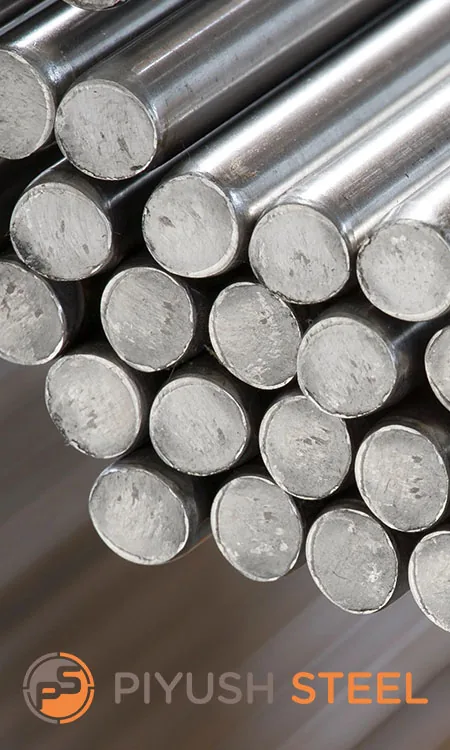
At a glance
Confirm the applicable specification and availability for your required size and condition.
Material overview
Jethete M152 Round Bar is a high-strength martensitic stainless steel bar identified as UNS S64152. It contains chromium, nickel, molybdenum and other alloying elements that help provide strength, toughness and oxidation resistance. The material can be hardened and tempered to develop the mechanical properties required for specific components.
Jethete M152 round bars are used in applications such as turbine components, shafts, aerospace hardware and high-strength fasteners. Performance depends on the heat-treatment condition, bar dimensions and applicable specification. For other material options, browse the stainless steel round bar range or compare the separate Custom 450 Round Bar page; these grades should not be treated as direct substitutes without engineering approval.
Material selection
Jethete M152 is a heat-treatable martensitic alloy rather than an austenitic or precipitation-hardening stainless steel. The required properties depend on the condition, bar section and governing specification. Select the grade using the drawing and confirm all acceptance requirements before machining.
Industrial applications
Jethete M152 was developed for highly stressed components where strength, toughness and elevated-temperature capability are important. Its use is associated especially with turbine and aerospace engineering, subject to project-specific qualification.
Selection for a particular service temperature and duty must follow the design code, component specification and qualified material data; a general round-bar description is not an approval for aerospace use.
Material specifications
The same alloy may be described under different regional or aerospace specifications. UNS S64152 identifies the alloy, whereas the purchase specification controls bar manufacture, properties and inspection.
| Reference | Application / importance |
|---|---|
| UNS S64152 | Alloy identification for Jethete M152 |
| ASTM A565 / XM-32 | Martensitic stainless steel bar specification; confirm grade, revision and required treatment |
| AMS 5719 | Aerospace material specification associated with Jethete M152 bars; check the required condition and revision |
| AMS 5718 | Another Jethete M152 product specification used for certain forms/conditions; not interchangeable without approval |
| BS S151 / S159 | British aerospace specifications associated with M152; requirements vary with grade and treatment |
Specify the actual bar diameter, cut length, surface condition and tolerance in the RFQ. Hot-worked, turned, peeled or ground finishes may be considered depending on the available mill product. Do not assume a fixed stocked size range or that all finishes are available.
For procurement, also state whether test reports, ultrasonic inspection, certification to EN 10204 or other third-party inspection is required.
Chemical composition
The following values are representative composition ranges in weight percent published for Jethete M152 material. Exact chemistry limits must be verified against the specified AMS, ASTM or British material standard.
| Element | Reported range / limit (wt. %) |
|---|---|
| Chromium (Cr) | 11.0–12.5 |
| Nickel (Ni) | 2.0–3.0 |
| Molybdenum (Mo) | 1.50–2.00 |
| Vanadium (V) | 0.25–0.40 |
| Carbon (C) | 0.08–0.13 |
| Manganese (Mn) | 0.50–0.90 |
| Nitrogen (N) | 0.02–0.04 |
| Silicon (Si) | 0.35 max. |
| Iron (Fe) | Balance |
The chromium content contributes oxidation and corrosion resistance, while molybdenum, vanadium and controlled nitrogen support the alloy's mechanical performance. These ranges are not a substitute for a heat-specific mill test certificate.
Mechanical behaviour
Jethete M152 obtains high strength through hardening and tempering. Mechanical properties vary substantially with heat treatment, product section and the applicable specification; values for one condition should not be applied to another.
| Property | Illustrative BS S151D hardened-and-tempered bar value |
|---|---|
| Tensile strength | 930–1130 MPa |
| 0.2% proof stress | 780 MPa minimum |
| Elongation | 14% minimum |
| Brinell hardness | 286–311 HB (reported range) |
Values above are reported for BS S151D and are not universal acceptance values for every Jethete M152 or AMS 5719 supply condition. Confirm the specified revision, test orientation, section size and mill certificate.
The softened state supports preliminary machining. For critical components, the final hardening and tempering sequence is dictated by the product specification and engineering requirements. Jethete M152 is used in elevated-temperature applications, but maximum continuous service temperature depends on stress, duration and environment; it should not be selected from a single generic temperature claim.
Engineering considerations
Machinability and strength are affected by annealing, hardening and tempering. State the machining condition explicitly.
Mechanical properties and heat-treatment response may differ with bar diameter; confirm applicable ruling-section limits.
Specify finish, straightness, tolerances and any machining allowances needed for precision components.
For critical applications, confirm chemical and mechanical certification, heat identification and any ultrasonic or special inspection requirements.
Grade identification
Names used for this alloy appear in different standards systems. They should be treated as related references, not automatic substitutes for the complete specified condition and approval requirements.
| Designation system | Reference |
|---|---|
| Trade name | Jethete M152 |
| UNS | S64152 |
| ASTM | A565, Grade XM-32 (confirm specification revision) |
| AMS | 5719; 5718 where applicable |
| British aerospace | BS S151; BS S159 (different specified conditions) |
| European references | 1.4933 / 1.4938 / 1.4939 appear in supplier cross-reference lists; verify before treating them as equivalent |
If the design drawing calls for a specific AMS or BS condition, confirm equivalence with the project engineer rather than substituting the nearest commercial designation.
More about the material
Jethete M152 bar may be ordered with a hot-worked, turned, peeled or ground surface, depending on the product and supplier. For a machined shaft or turbine part, specify the finished diameter, starting bar size, straightness and machining allowance. The round bar range explains other bar forms used for machining.
Jethete M152 develops its required strength through controlled heat treatment. Machining before and after hardening can affect final dimensions, so the heat-treatment condition and finishing sequence should be stated on the drawing or order. A softened bar should not be assumed to meet the mechanical properties of a hardened-and-tempered bar.
For demanding components, confirm the heat number, chemical analysis, mechanical test results and required inspection reports before machining. Keep the material identification with each cut piece and specify any ultrasonic or other special tests in advance. See the site's quality assurance information and use the Jethete enquiry form to share your requirements.
Frequently asked questions
Jethete M152 is a hardenable martensitic stainless steel, UNS S64152, developed for high-strength components including turbine and aerospace parts.
Jethete M152 is designed for high mechanical strength after hardening and tempering. Its roughly 12% chromium martensitic structure differs from common austenitic grades such as 304 or 316.
AMS 5719 and ASTM A565 / XM-32 are commonly referenced. Some specifications also refer to British aerospace grades BS S151 and BS S159. Confirm the exact material standard, condition and revision for the order.
It is used for selected turbine blades, compressor hardware and other high-stress components, subject to engineering approval, material certification and suitable heat treatment.
For strength-critical applications it is commonly hardened and tempered. The required treatment and mechanical values must be taken from the governing specification.
Specify the standard and revision, bar diameter, length, quantity, supply condition, dimensional tolerances, test requirements, documentation and delivery destination.
Each supplied bar or cut piece should remain linked to its heat number and material test certificate. For critical components, the order should also state marking, inspection and any third-party documentation requirements.
Specification-led enquiries
Include the governing standard, dimensions, quantity, condition, testing requirements, documentation, and destination.