
Nickel 200 Round Bar
Review dimensions, condition and technical requirements for Nickel 200 Round Bar.
View productManufacturer · Exporter · Supplier
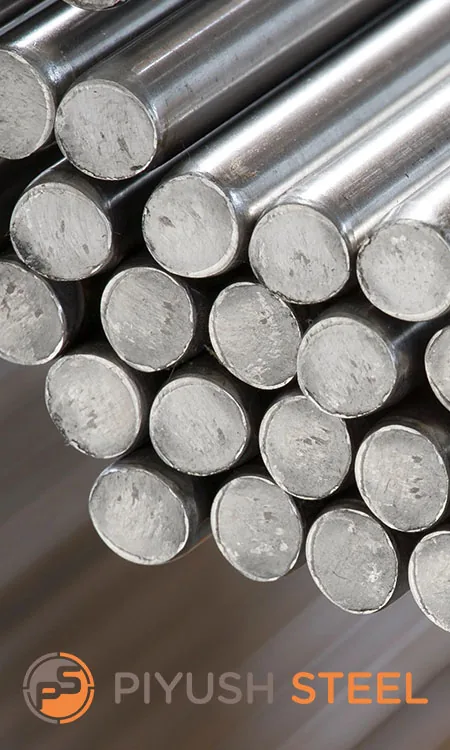
Nickel round bars are solid bars made from commercially pure nickel, selected for their corrosion resistance, good formability and useful electrical and thermal characteristics. Nickel 200 and Nickel 201 are the two grades listed in this category. Their main difference is carbon content, which can affect suitability for elevated-temperature service.
Product discovery
Compare 2 products below, then send your grade and size requirements.
Review dimensions, condition and technical requirements for Nickel 200 Round Bar.
View productReview dimensions, condition and technical requirements for Nickel 201 Round Bar.
View productNo matching product is shown. Check the spelling or send the governing designation with your enquiry.
Category selection guide
Choose the product record that matches the grade or designation in the governing document. Then confirm the product standard, size, condition, finish, tolerance, testing, and documentation instead of relying on the category name alone.
Nickel material guide
Nickel 200 (UNS N02200) and Nickel 201 (UNS N02201) are commercially pure nickel grades rather than nickel-chromium superalloys. Both are used where the properties of nickel itself are required. Nickel 201 is a low-carbon version of Nickel 200, developed to reduce the risk of carbon-related changes to the structure during certain elevated-temperature exposures.
Grade selection should consider the chemical environment, operating temperature, bar condition and applicable design code. Neither grade is automatically suitable for every acid, alkali or high-temperature application.
| Property | Nickel 200 | Nickel 201 |
|---|---|---|
| UNS designation | N02200 | N02201 |
| Material type | Commercially pure nickel | Low-carbon commercially pure nickel |
| Minimum nickel content (typical ASTM B160 requirement) | 99.0% | 99.0% |
| Carbon limit (mass %) | 0.15% maximum | 0.02% maximum |
| Main selection consideration | General corrosion-resistant and fabrication uses within appropriate temperature limits | Lower carbon content for applications where exposure to higher temperatures makes carbon control important |
| Product form covered by ASTM B160 | Rod and bar | Rod and bar |
Note: The figures above refer to composition limits, not guaranteed properties for every heat. Confirm the edition of ASTM B160 and the material test report for the specific order. Grade 201 is often preferred for service where Nickel 200 may be affected by graphitization; final selection remains dependent on temperature, time and operating environment.
| Requirement | Technical information |
|---|---|
| Common rod and bar specification | ASTM B160 / ASME SB-160, where called for by the purchase specification |
| Nickel 200 designation | UNS N02200 |
| Nickel 201 designation | UNS N02201 |
| Possible bar conditions | Hot-worked, cold-worked or annealed, subject to the applicable specification and grade |
| Cross-sectional forms | Round; other solid sections may be specified within the applicable standard |
| Order details | Grade/UNS number, standard and edition, diameter, length, tolerance, condition, quantity and testing |
ASTM B160 addresses the rod and bar product form. It should not be confused with standards for nickel sheet, plate, pipe or tube. Mechanical acceptance values depend on grade, size and supply condition.
| Element or feature | Nickel 200 | Nickel 201 | Why it matters |
|---|---|---|---|
| Nickel | 99.0% minimum | 99.0% minimum | Provides the principal material characteristics |
| Carbon | 0.15% maximum | 0.02% maximum | Key distinction for elevated-temperature behaviour |
| Other controlled elements | Limits apply under the specified standard | Limits apply under the specified standard | Impurities and residual elements must be checked against the ordered edition |
Commercially pure nickel is different from nickel-based alloys such as Inconel and Hastelloy, where significant chromium, molybdenum or other additions are used to obtain different performance. Nickel 200 and 201 are not interchangeable with those alloys simply because they all contain nickel.
Nickel 200 and 201 offer ductility, formability and resistance to certain corrosive environments. Their exact tensile strength, yield strength, elongation and hardness vary with processing and condition. Cold working generally raises strength and hardness, whereas annealing restores ductility. Engineers should use certified condition-specific results rather than one universal strength value.
| Characteristic | Practical relevance |
|---|---|
| Ductility and forming | Suitable for forming and fabrication when the material condition is chosen correctly |
| Strength and hardness | Change with annealing and cold working; verify test certificates |
| Thermal conductivity | Can be useful in thermal equipment; design values depend on temperature |
| Electrical characteristics | Useful in certain electrical and electronic components, subject to detailed requirements |
| Corrosion resistance | Environment-dependent; verify chemical concentration, temperature and contaminants |
Pure nickel bars can be machined or fabricated into components for chemical processing equipment, alkali-handling systems, electrical parts and industrial equipment. Typical components include pins, shafts, fittings, fastener blanks and machined parts, but suitability depends on the actual environment and engineering specification.
For certain caustic alkali duties, nickel can offer useful corrosion resistance. However, oxidizing chemicals, contaminants, temperature and flow conditions can change performance considerably. Corrosion review and design approval are necessary for critical service.
Nickel bar stock may be hot worked and further processed by cold working, straightening, cutting or machining. Depending on requirements, the surface may be supplied in a hot-worked, pickled, machined or bright condition. A requested finish should be confirmed with the supplier rather than assumed for every diameter.
Machining pure nickel requires suitable tooling and process control because nickel can work harden during cutting. Dimensional tolerances, surface condition and handling requirements should be part of the purchase order.
Check the heat number, chemical analysis, applicable tensile and hardness testing, bar dimensions and surface inspection against the purchase standard. Material test certificates and traceability records should identify the supplied grade and condition. Additional testing should be specified before manufacture or supply if required by the project.
Start with the material designation approved in the drawing or equipment specification. Compare the intended operating temperature, chemical exposure, manufacturing route and mechanical properties. Use Nickel 200 round bar for its own specified applications and Nickel 201 round bar where the low-carbon grade is called for. Do not substitute one for the other without engineering approval.
Common questions
Nickel 200 is commercially pure nickel designated UNS N02200. It is used for components where its specified corrosion, forming and physical properties are appropriate.
Nickel 201 has a lower maximum carbon content: 0.02% compared with 0.15% for Nickel 200. This matters especially when selecting material for certain elevated-temperature conditions.
ASTM B160 covers nickel rod and bar, including UNS N02200 and UNS N02201. Confirm the standard edition and supply condition on the purchase order.
They should not be assumed interchangeable. Nickel 201 is generally selected where lower carbon is needed for elevated-temperature service; actual temperature limits depend on the application and governing code.
They resist corrosion in certain environments, including some alkali services, but performance depends on the chemical, concentration, temperature and impurities.
Specify the UNS grade, ASTM standard and edition, diameter, length, quantity, manufacturing condition, surface finish, tolerances, inspection and certification requirements.
Specification-led enquiries
Send the grade or standard, dimensions, quantity, condition, testing requirements, documentation, and destination.