
Hardening and tempering
State the required condition or final hardness. Heat treatment affects both wear performance and toughness.
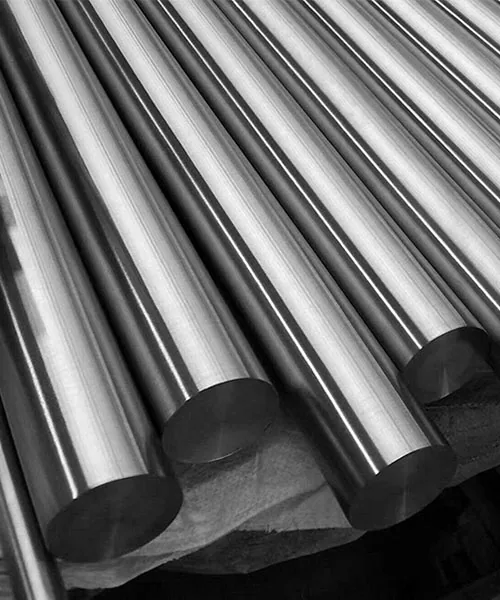
Stainless Steel Round Bar
Stainless Steel 420 round bar (UNS S42000) is a hardenable, martensitic chromium stainless steel used for machined parts that need strength, wear resistance and a suitable surface finish. Its hardness can be increased through controlled heat treatment. Grade 420 is commonly considered for shafts, valve parts, tools and cutting components; the required hardness and corrosion conditions should be evaluated before selecting it instead of SS 410 round bar.
Piyush Steel India handles enquiries for SS 420 bars in specified diameters, lengths, finishes and supply conditions. Buyers should state whether the material is required annealed or hardened and tempered, together with the product standard, test certificate and any machining allowance. For improved corrosion resistance, compare SS 304 round bar; for higher-hardness cutting applications, compare SS 440C round bar. Availability and final properties depend on the required size and condition.
WhatsApp opens with a ready-to-send enquiry. Select the intended recipient to send it.
At a glance
Cross-standard designations are not automatic substitutions. Confirm the chemical limits, condition and acceptance criteria on the order.
Grade explanation
SS 420 is a martensitic stainless steel whose chromium contributes to corrosion resistance while its carbon permits hardening by heat treatment. The balance of hardness, toughness and strength changes with the austenitizing, quenching and tempering cycle. It differs from SS 416 round bar, which contains sulfur for easier machining, and SS 410 round bar, which generally has lower carbon and a different hardening response.
Grade 420 is not a universal choice for seawater, strong chlorides or heavily corrosive chemicals. When the environment is the main concern, engineers may compare an austenitic grade such as SS 304 round bar; the selection should follow the actual service conditions rather than the grade name alone.
Buyer selection guide
First establish whether the application needs an easily machined blank, a final hardened component or a specific balance of hardness and toughness. For lighter-duty parts, compare SS 410 round bar; for a higher corrosion-resistance requirement, review SS 431 round bar alongside the operating environment.
Where complex machining is involved, SS 416 round bar may be worth comparing, while SS 440C round bar may be relevant to applications prioritizing very high hardness. These are different alloys, not direct substitutes.
Typical uses
Grade 420 is often considered for components that require machining followed by controlled hardening and tempering. Suitability depends on the finished hardness, section size and exposure conditions.
Bar specifications
Round bar is available in different production and finishing conditions. The source page listed the following nominal product range; confirm what can be supplied for the required heat-treatment condition.
| Item | Reference information |
|---|---|
| Diameter | 4–350 mm (source-listed range; confirm availability) |
| Length | 1–6 m; cut lengths by enquiry |
| Surface | Black, bright, ground or polished as specified |
| Product specification | ASTM A276 where applicable; confirm bar grade and edition |
| Other bar shapes | Square, hexagonal and forged forms subject to enquiry |
| Supply condition | Annealed or heat-treated as agreed |
For specific finishes and dimensions, see the SS 430 round bar page for a ferritic stainless comparison, or the bright round bar product-form page for finishing information.
Chemical composition
The source page listed chromium 12.0–14.0% and a carbon minimum of 0.15%. The source used unreadable symbols for several maximum limits; these are interpreted below as “max” and must be checked against the controlling standard before acceptance.
| Element | Source reference (% by mass) |
|---|---|
| Chromium (Cr) | 12.0–14.0 |
| Carbon (C) | 0.15 minimum |
| Manganese (Mn) | 1.00 maximum* |
| Silicon (Si) | 1.00 maximum* |
| Phosphorus (P) | 0.040 maximum* |
| Sulfur (S) | 0.030 maximum* |
*The source displayed “?” instead of a comparison symbol. These values require confirmation from the specified standard; EN 1.4021 chemistry can differ from UNS S42000.
Mechanical properties
Hardness and strength of martensitic grade 420 vary significantly with annealing, hardening and tempering. The source listed the following figures without specifying a condition, so they should be read only as unverified source references—not guaranteed ASTM acceptance values.
| Property | Original page reference |
|---|---|
| Tensile strength | 650–850 MPa |
| Yield strength | 440 MPa |
| Elongation | 20% |
| Brinell hardness | 241 HB maximum |
Verify each property against the product standard, bar dimensions and agreed heat-treatment condition. The figures above may not represent one consistent condition.
Technical considerations
State the required condition or final hardness. Heat treatment affects both wear performance and toughness.
Check whether moisture, chlorides and cleaning chemicals are compatible with grade 420.
Allow for finishing stock and any distortion-sensitive operations after treatment.
Agree the heat number, test certificate, inspection scope and marking before ordering.
Standards and designations
| System | Designation / qualification |
|---|---|
| UNS / ASTM reference | UNS S42000 / Type 420; check relevant ASTM product standard |
| EN | 1.4021 / X20Cr13 (commonly compared; not a direct chemistry substitution) |
| JIS | SUS420 family; specify exact subgrade, e.g. SUS420J1 or SUS420J2, when applicable |
A generic “SUS 420” designation does not identify all required JIS chemistry limits. Confirm the requested grade, edition and heat-treatment condition.
Product questions
SS 420 is a martensitic chromium stainless steel that can be heat-treated to achieve higher hardness than the annealed condition.
Yes. Heat treatment can increase hardness, but the final result depends on the section size and controlled austenitizing, quenching and tempering parameters.
Grade 420 generally has a higher minimum carbon requirement and different hardening characteristics. Review the SS 410 round bar data before choosing between them.
It should not be selected solely on its stainless-steel designation. Corrosion performance is limited in aggressive chloride service and must be assessed for the application.
Specify the exact grade, applicable bar standard and edition, required condition, dimensions, testing and documents. EN 1.4021 or JIS grades must not be substituted without comparison.
Include diameter, length, quantity, finish, required heat treatment or hardness, tolerances, certification, inspection and delivery destination. Use the enquiry form for a quotation.
Specification-led enquiries
Include the governing standard, dimensions, quantity, condition, testing requirements, documentation, and destination.