
Corrosion environment
Verify compatibility with the operating fluid, chloride content, cleaning chemicals and expected exposure; 410 has lower corrosion resistance than many austenitic grades.
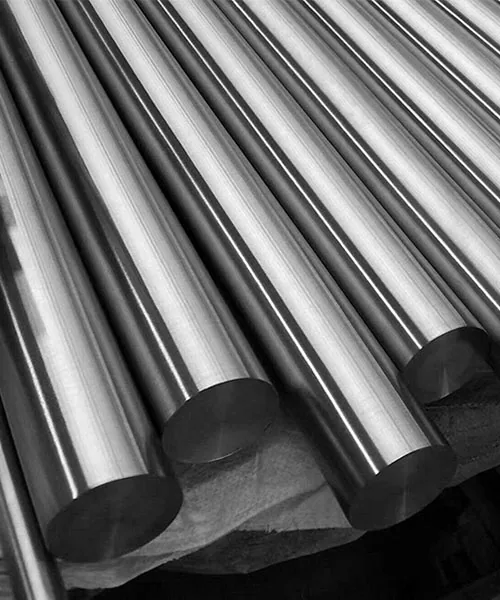
Martensitic Stainless Steel Round Bar
Stainless Steel 410 Round Bar (UNS S41000) is a chromium-based martensitic stainless steel bar that can be hardened by heat treatment. It is used to manufacture shafts, fasteners, valve parts and other machined components where strength, wear resistance and moderate corrosion resistance are needed.
SS 410 contains approximately 11.5–13.5% chromium and differs from austenitic grades such as SS 304 round bar and SS 316. Its hardness and mechanical strength depend strongly on whether the bar is supplied annealed, hardened or tempered. The selected heat-treatment condition is therefore just as important as the grade designation when buying 410 round bars.
Piyush Steel India handles enquiries for SS 410 round bars identified as UNS S41000, EN 1.4006 (X12Cr13) and JIS SUS 410. Buyers can specify the bar diameter, length, finish, governing material standard and required testing. Available sizes and delivery conditions should be confirmed against the actual order requirement.
At a glance
Grade identifiers and material standards are not interchangeable acceptance documents. Confirm the exact product specification and edition before ordering.
Material overview
Stainless Steel 410 is a basic martensitic stainless steel whose main alloying element is chromium. Its structure can be changed by appropriate heating and cooling, allowing the material to develop greater hardness than it has in the annealed condition. Subsequent tempering is used to adjust strength and toughness for the application.
Because of this heat-treatment response, an SS 410 round bar is often selected for mechanical components rather than solely for corrosion resistance. It offers better resistance to mild atmospheric and certain process environments than ordinary carbon steel, but it generally does not match the chloride corrosion resistance of molybdenum-bearing austenitic grades. Surface condition, heat treatment and operating environment all affect performance.
Buyer selection guide
Start with the component drawing and its operating conditions. For 410, specify the required heat-treatment condition and mechanical properties rather than ordering on grade name alone. For components where easier machining is a priority, compare Stainless Steel 416 Round Bar, noting its different composition and corrosion behaviour. Where welding is planned, review the welding procedure, preheat and post-weld requirements with the fabricator.
Industrial applications
Grade 410 is commonly considered where a machined part needs a combination of attainable hardness, mechanical strength and moderate resistance to corrosion. For parts needing higher attainable hardness, buyers may also compare Stainless Steel 420 Round Bar. Suitability depends on heat treatment and service conditions.
SS 410 should not be treated as a general substitute for SS 316 in seawater, high-chloride solutions or strongly corrosive chemical service. Check the actual environment and required corrosion allowance with the design engineer.
Sizes and standards
Product standards commonly referenced for stainless round bars include ASTM A276 and, for applicable engineering uses, ASTM A479. EN 10088-3 and JIS G4303 may be specified where the purchase documents call for European or Japanese material designations. The applicable standard determines which conditions and properties must be met.
| Requirement | Details to specify |
|---|---|
| Grade | SS 410 / UNS S41000 / EN 1.4006 / SUS 410 |
| Diameter | 4–300 mm is the indicative range quoted on the original page; confirm actual size availability |
| Length | Up to 6 metres is the original indicative range; confirm cutting and transport limits |
| Surface condition | Black/hot-finished, bright, turned, ground or polished, subject to availability |
| Heat-treatment condition | Annealed or hardened and tempered, as required by the order and product standard |
| Inspection | Dimensional checks, chemical analysis, mechanical testing and material certificates as specified |
These are enquiry guidelines, not a verified live stock list. Bar tolerances, surface finish and mechanical acceptance criteria must be agreed for the required diameter and processing condition.
Chemical composition
SS 410 is primarily a chromium stainless steel. The composition below reproduces the reference limits from the uploaded page; acceptance must follow the edition of the product standard named on the order.
| Element | Original page reference (% by mass) |
|---|---|
| Chromium (Cr) | 11.5–13.5 |
| Carbon (C) | 0.15 maximum |
| Manganese (Mn) | 1.00 maximum |
| Silicon (Si) | 1.00 maximum |
| Phosphorus (P) | 0.040 maximum |
| Sulfur (S) | 0.030 maximum |
| Iron (Fe) | Balance |
Chromium supports formation of the protective surface oxide film. Carbon contributes to the ability of the steel to harden during heat treatment; the final properties depend on the processing route as well as chemistry.
Mechanical properties
Mechanical properties for SS 410 vary substantially with annealing, hardening, tempering and bar dimensions. The figures below are reproduced from the original page for reference only; it did not identify a particular test condition or standard edition.
| Property | Original page reference |
|---|---|
| Yield strength | 275 MPa |
| Tensile strength | 485 MPa |
| Elongation | 20% |
| Reduction of area | 45% |
| Brinell hardness | 223 HBW maximum |
Do not use the table as a universal minimum-property schedule or a guarantee for hardened-and-tempered bar. Confirm the relevant condition, product size, test methods and standard limits from the purchase specification or mill test certificate.
In the annealed condition, grade 410 is comparatively easier to machine and fabricate. Hardening followed by suitable tempering changes its strength, hardness and toughness. The correct cycle depends on bar section size and the intended service; an unsuitable condition can lead to cracking, reduced toughness or poor service performance.
Technical considerations
Verify compatibility with the operating fluid, chloride content, cleaning chemicals and expected exposure; 410 has lower corrosion resistance than many austenitic grades.
Specify the final condition and any applicable welding procedure, preheat or post-weld heat treatment for the component.
Agree diameter tolerance, straightness, surface condition, cutting length and machining allowance.
Agree mechanical test requirements, material test reports, heat number and grade marking, and any third-party inspection.
Grade designations
Different markets identify broadly corresponding materials using different grade systems. The final acceptance requirements can still differ by product standard, dimension and delivery condition.
| System / reference | Grade designation |
|---|---|
| UNS | S41000 |
| EN designation | 1.4006 / X12Cr13 |
| JIS | SUS 410 |
| ASTM bar specifications | A276; A479 where applicable |
Grade cross-references should not be used in place of a specified standard and edition. For comparison with other stainless steel options, see the linked products below.
Frequently asked questions
SS 410 is a martensitic grade that can be hardened by heat treatment. SS 304 is an austenitic grade generally selected for broader corrosion resistance and formability. Grade selection depends on strength, temperature, fabrication and corrosion exposure.
Yes. SS 410 can be hardened by suitable heat treatment and then tempered to adjust hardness and toughness. Specify the required condition and properties rather than relying on the grade name alone.
Grade 410 has moderate corrosion resistance and is generally not preferred for continuous seawater or aggressive chloride service. Materials should be chosen based on actual service conditions and design requirements.
Common references include UNS S41000, EN 1.4006 / X12Cr13, SUS 410, ASTM A276 and ASTM A479 where applicable. Confirm the exact product standard and edition for the order.
The original page mentions an indicative 4–300 mm diameter range and lengths up to 6 metres. Buyers may request hot-finished, bright, turned or polished surfaces, subject to confirmation of actual supply.
Include grade and standard, diameter, length, quantity, heat-treatment condition, hardness or strength requirements, surface finish, tolerances, material certificates, inspection requirements and delivery destination.
Specification-led enquiries
Include the governing standard, dimensions, quantity, condition, testing requirements, documentation, and destination.