
Service atmosphere
Oxidizing, reducing, carburizing and sulfur-bearing atmospheres affect high-temperature material behavior differently.
Heat-resistant austenitic stainless steel
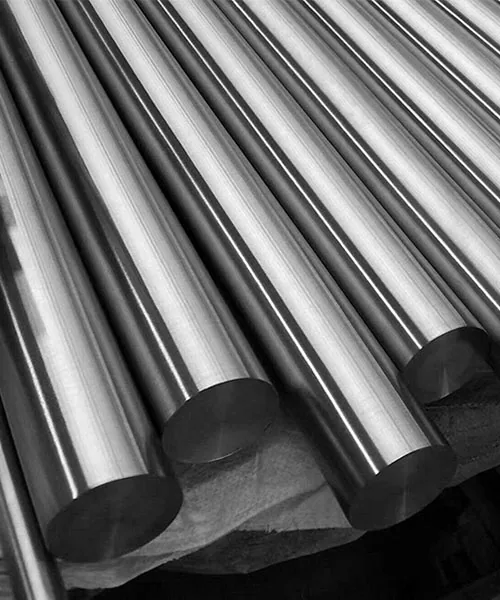
Stainless Steel 314 round bar (UNS S31400) is a chromium-nickel-silicon austenitic stainless steel bar used for components that require resistance to oxidation and scaling at elevated temperatures. Its silicon content distinguishes it from many other heat-resistant stainless grades. The operating temperature and atmosphere must be assessed for each application.
Piyush Steel India handles enquiries for SS 314 round bars by specified grade, diameter, length, surface finish, testing and delivery requirements. Stock and processing capabilities are confirmed for each enquiry.
At a glance
Grade cross-references and bar availability must be verified for the specific purchase standard and order.
Material overview
SS 314 round bar is a solid cylindrical bar produced from a high-chromium, high-nickel austenitic stainless steel that includes a controlled silicon addition. Chromium supports formation of a protective oxide layer, while silicon can improve resistance to surface scaling in certain high-temperature oxidizing environments.
Grade 314 is primarily considered for elevated-temperature service rather than as a general-purpose alternative to common stainless steels. Actual performance depends on temperature, atmosphere, thermal cycling and mechanical loading. For demanding designs, assess creep, strength and fabrication requirements rather than relying on oxidation resistance alone.
Buyer selection guide
Use the design drawing and approved purchase specification as the starting point. A grade name alone does not establish the required mechanical properties, finish or acceptance criteria.
Industrial applications
Grade 314 may be specified for manufactured parts that see prolonged heat and oxidizing atmospheres, subject to engineering review of the actual service conditions.
SS 314 should not be assumed suitable for every corrosive, reducing, sulfur-bearing or pressure-containing environment. Obtain application-specific material approval.
Specifications and supply
Dimensions are order-specific. The original page refers to diameters of 5–500 mm and lengths up to 6 metres, but these figures are enquiry ranges, not verified stock or guaranteed manufacturing limits.
| Requirement | Specification guidance |
|---|---|
| Grade | SS 314 / UNS S31400 |
| Product form | Solid round bar; other bar profiles require separate confirmation |
| Product standard | ASTM A276 / ASTM A479 or an agreed suitable EN standard, where the relevant grade and form are covered |
| Diameter | Supply to be confirmed against requested size, tolerance and condition |
| Length | Cut lengths or commercial lengths as agreed |
| Surface finish | Black, turned, ground or polished, subject to availability |
| Inspection | MTC, dimensional checks and other testing as specified in the order |
When alternatives such as bright bar or forged bar are required, confirm that the requested SS 314 grade is available in that product form.
Chemical composition
These composition figures are retained from the uploaded source page as a reference for UNS S31400. Confirm them against the governing standard and edition before contractual or engineering use.
| Element | Reference composition, % by mass |
|---|---|
| Chromium (Cr) | 23.0–26.0 |
| Nickel (Ni) | 19.0–22.0 |
| Silicon (Si) | 1.5–3.0 |
| Carbon (C) | 0.25 max |
| Manganese (Mn) | 2.0 max |
| Phosphorus (P) | 0.045 max |
| Sulfur (S) | 0.030 max |
| Iron (Fe) | Balance |
The elevated silicon content is a distinguishing characteristic of Grade 314 compared with many standard austenitic stainless steels.
Mechanical properties
The uploaded page lists the reference figures below. These are not verified ASTM/EN acceptance limits; the mechanical-property requirements depend on product standard, size, supply condition and test method.
| Property | Value stated in original page | Verification |
|---|---|---|
| Tensile strength | 620 MPa | Confirm whether minimum applies |
| Yield strength | 310 MPa | Confirm test definition and supply condition |
| Elongation | 30% | Confirm gauge length and minimum |
| Reduction of area | 40% | Confirm requirement in applicable standard |
| Hardness | 237 HBW | Confirm whether a maximum applies; no NACE claim is made |
Do not use the figures above as guaranteed values or design allowables without checking the applicable material standard and mill certificate.
Engineering considerations
Oxidizing, reducing, carburizing and sulfur-bearing atmospheres affect high-temperature material behavior differently.
Account for creep, thermal cycling, section thickness and equipment design requirements.
Confirm machining, welding procedure, heat treatment and finish requirements with the applicable specification.
Specify the product standard, chemistry, tensile tests, identification and certificate requirements before purchasing.
Grade identification
| Designation system | Grade reference |
|---|---|
| AISI / common grade | 314 |
| UNS | S31400 |
| EN number | 1.4841 |
| EN steel name | X15CrNiSi25-21 |
| JIS reference on original page | SUS 314 — confirm designation and applicable product standard |
Grade cross-references identify similar materials but do not automatically permit substitution between standards. Buyers may also compare SS 310, SS 310S and 253MA where the design specification allows a different heat-resistant material.
Frequently asked questions
SS 314 (UNS S31400) is a silicon-alloyed austenitic stainless steel used for components exposed to high-temperature oxidizing environments. Suitability depends on temperature, atmosphere, loading and product condition.
SS 314 has a deliberately higher silicon range that supports oxidation and scaling resistance in suitable atmospheres. SS 310 and SS 310S have their own chemistry and service characteristics; compare approved specifications before substitution.
UNS S31400, EN 1.4841 and X15CrNiSi25-21 are referenced for this material. ASTM A276 / A479 and relevant EN product specifications may be applicable depending on the specified product and edition. Verify the exact purchasing standard.
The reference chemistry includes 23–26% chromium, 19–22% nickel and 1.5–3.0% silicon, with carbon up to 0.25%. The full acceptance limits must be checked against the governing material specification.
They may be considered for furnace fixtures, supports and other heat-processing components where high-temperature oxidation resistance is required. Engineering design must also address creep, thermal cycling and the actual operating atmosphere.
Provide the governing grade and standard, diameter, length, quantity, finish, supply condition, inspection and test-document requirements, destination, and desired delivery date.
Specification-led enquiries
Include the governing standard, dimensions, quantity, condition, testing requirements, documentation, and destination.