
Furnace equipment
Support members, fixtures and components used in heat-treatment furnaces.
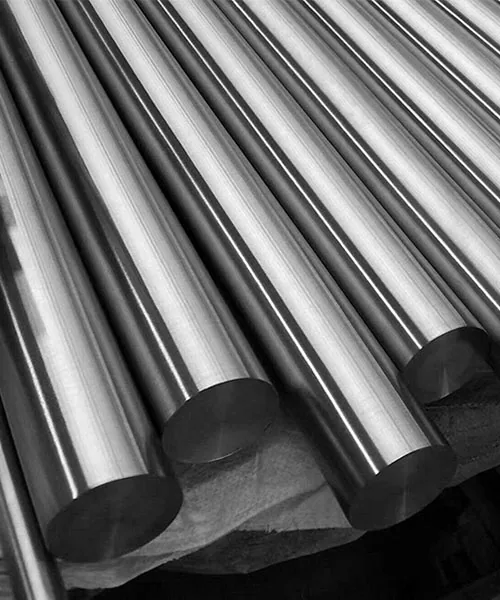
Stainless Steel Round Bar
Stainless Steel 310 round bar (UNS S31000) is a high-chromium, high-nickel austenitic stainless steel bar used for components exposed to elevated temperatures. Its alloy composition offers oxidation resistance in suitable furnace and thermal-processing environments. Service temperature limits depend on the atmosphere, loading and design requirements.
Specify the product standard, diameter, length, condition, surface finish, quantity and required inspection documents when enquiring about SS 310 round bar.
At a glance
Grades and designation cross-references must be confirmed against the governing specification; availability is subject to quotation.
Material overview
SS 310 round bar is solid cylindrical bar manufactured from an austenitic stainless alloy with approximately 24–26% chromium and 19–22% nickel. These alloying elements help form a protective oxide layer in appropriate high-temperature service. SS 310 is considered for furnace equipment, thermal-processing components and other parts requiring resistance to oxidation.
Although the grade is intended for demanding temperatures, performance varies with thermal cycling, atmosphere, mechanical stress and the presence of sulfur-containing gases or other aggressive media. Grade 310 is not automatically suitable for every corrosive or high-temperature application.
Industrial uses
SS 310 round bar can be machined or fabricated into components for thermal equipment when the design and operating conditions permit its use.
Support members, fixtures and components used in heat-treatment furnaces.
Machined holders, baskets and other parts exposed to elevated operating temperatures.
Components for process heaters and industrial heating equipment.
Selected high-temperature parts where the specified service environment is compatible with Grade 310.
High-temperature equipment components subject to engineering approval.
Selection should account for creep, thermal cycling, corrosion, mechanical loads and the governing equipment code.
Product specifications
| Specification item | Details to confirm |
|---|---|
| Grade | Stainless Steel 310 / UNS S31000 |
| Product standards | ASTM A276, ASTM A479 or other appropriate bar specification as required by the purchase order |
| Diameter | Original catalogue reference: 5–500 mm; confirm actual supply range before ordering |
| Length | Original catalogue reference: up to 6 metres; confirm availability and cutting requirements |
| Surface condition | Black, bright or polished, subject to grade, diameter and processing route |
| Documentation | Mill test certificate, heat traceability and inspection documents as specified |
SS 310 may be considered in round, square, hexagonal or forged bar forms depending on manufacturing availability. Each form requires its own dimensional, finishing and acceptance requirements. For general form information, see Round Bar and Forged Bar.
The size range is carried over from the original page as an enquiry reference, not a verified inventory statement.
Alloy chemistry
Typical compositional limits for Grade 310 (UNS S31000) are shown below by mass percentage. Confirm the precise requirements with the applicable material standard and edition.
| Element | Reference composition (%) | Limit |
|---|---|---|
| Carbon (C) | 0.25 | Maximum |
| Manganese (Mn) | 2.00 | Maximum |
| Silicon (Si) | 1.50 | Maximum |
| Phosphorus (P) | 0.045 | Maximum |
| Sulfur (S) | 0.030 | Maximum |
| Chromium (Cr) | 24.00–26.00 | Range |
| Nickel (Ni) | 19.00–22.00 | Range |
The chromium and nickel contents help explain the grade's oxidation resistance. Chemical composition alone cannot establish suitability for a particular application.
Reference properties
The following values are reference figures from the supplied page; applicable limits depend on the bar specification, size, product condition and test method.
| Property | Reference value | Qualification |
|---|---|---|
| Tensile strength | 515 MPa | Minimum stated in source page |
| Yield strength | 205 MPa | Minimum stated in source page |
| Elongation | 40% | Minimum stated in source page |
| Hardness | 237 HBW | Maximum stated in source page |
These values must not be assumed to be universal Grade 310 acceptance criteria or high-temperature design allowables. The former NACE MR0175 label has been removed because sour-service compliance cannot be inferred from hardness alone.
Specification checks
Confirm oxidation, carburization, sulfur exposure, thermal cycling and operating temperature before specifying this grade.
Room-temperature tensile figures are not a substitute for creep, rupture or code design data at high temperatures.
Agree the applicable standard, diameter, tolerance, heat-treatment condition, finish and machining allowance.
Define required MTC, heat identification, inspection, testing, marking and shipment documents.
Grade identification
Use the appropriate designation with the applicable material standard. Similar names across different systems are not proof of complete interchangeability.
| System or specification | Designation / reference |
|---|---|
| UNS | S31000 |
| EN material number | 1.4840 (check standard-specific requirements) |
| ASTM bar standards | Grade 310 under the applicable ASTM A276 / A479 edition |
| JIS | SUS 310 designation cited by the original page; verify current availability and matching standard |
For a lower-carbon grade used in related high-temperature applications, review Stainless Steel 310S Round Bar. Grade 310S is not a drop-in replacement without engineering approval.
Frequently asked questions
Grade 310 round bar is used for selected furnace, heat-treatment and thermal-processing components where oxidation resistance is important. Final selection depends on temperature, loading and atmosphere.
The UNS designation for Stainless Steel 310 is S31000. Confirm the governing material standard when ordering.
310S is a lower-carbon variant of the 310 family. Chemistry and mechanical-property requirements differ, so any substitution should be approved against the governing specification.
Grade 310 is designed for elevated-temperature oxidation resistance. Maximum usable temperature depends on the service atmosphere, thermal cycles, applied load and relevant design code.
Applicable bar specifications may include ASTM A276 or ASTM A479, depending on the order. Confirm the grade, standard edition, dimensions, condition and required testing.
Send the grade and standard, diameter, length, quantity, finish, delivery condition, test-certificate requirements and destination so the supply details can be confirmed.
Specification-led enquiries
Include the governing standard, dimensions, quantity, condition, testing requirements, documentation, and destination.