
Standard and edition
Confirm the controlling document; a grade name or cross-reference alone is not a complete acceptance specification.
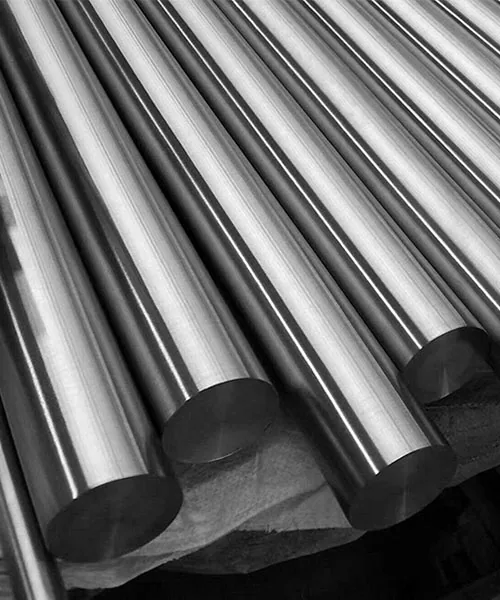
Stainless Steel Round Bar
Stainless Steel 304L round bar is a low-carbon austenitic chromium-nickel stainless steel, designated UNS S30403 and EN 1.4307. Compared with standard Grade 304, its lower carbon limit helps reduce sensitization during welding, making it useful for fabricated components where the specified corrosion performance must be maintained.
Specify the governing material standard, diameter, length, surface condition, tolerances, quantity, inspection and destination. Dimensions and properties below are references, not a guarantee of stock or certified acceptance.
At a glance
Confirm the standard, edition, size, condition and availability for each order.
Material overview
Stainless Steel 304L round bar is a solid cylindrical bar made from a low-carbon version of the widely used 18% chromium–8% nickel austenitic stainless steel family. The “L” identifies a lower maximum carbon content than standard Type 304. This helps limit chromium-carbide formation in the heat-affected zone of welded assemblies.
Grade 304L is commonly considered for fabricated shafts, fittings, fasteners and equipment parts where general corrosion resistance and weldability are important. It does not automatically suit every chloride-rich, marine, high-temperature or pressure-service environment; material selection depends on the actual conditions and governing design code.
For the standard grade comparison, review Stainless Steel 304 Round Bar. For applications requiring a molybdenum-bearing stainless grade, compare Stainless Steel 316L Round Bar.
Buyer selection guide
Use the product drawing and governing specification to identify the required grade, dimensional requirements and acceptance criteria.
Applications
SS 304L round bars can be machined or fabricated into components for a range of industrial equipment. Examples include:
Chloride concentration, temperature, cleaning chemicals, loads and applicable codes must be checked before material approval. For alternatives, compare SS 316 Round Bar and SS 316L Round Bar.
Specifications
Stainless Steel 304L bar can be ordered to different standards and delivery conditions. Not every listed grade, size or finish is available from stock; confirm the actual supply route at quotation.
| Requirement | What to specify |
|---|---|
| Material | 304L / UNS S30403, EN 1.4307 or SUS 304L, as required |
| Product standards | ASTM A276, ASTM A479, EN 10088-3 or JIS G4303, where applicable |
| Diameter | State the required nominal diameter and permitted tolerance |
| Length | State cut or random lengths and permitted variation |
| Supply condition | Specify solution-annealed, cold-finished or other required condition as permitted by the standard |
| Surface finish | Hot-finished, peeled, turned, ground or polished, subject to specification |
| Testing and documents | Specify chemical/mechanical tests, inspection certificate and heat traceability |
Original page diameter and length ranges were promotional listings without verified stock support, so dimensions are now treated as enquiry-specific.
If the drawing calls for a different section, see Square Bar, Hex Bar, Bright Bar and Forged Bar. Confirm Grade 304L availability in the requested form.
Chemical composition
Typical reference limits for Grade 304L are shown below in mass percent. Check the applicable ASTM, EN or JIS standard and edition for exact acceptance limits.
| Element | Composition (%) |
|---|---|
| Carbon (C) | 0.03 max |
| Manganese (Mn) | 2.00 max |
| Phosphorus (P) | 0.045 max |
| Sulfur (S) | 0.030 max |
| Silicon (Si) | 1.00 max |
| Chromium (Cr) | 18.00 – 20.00 |
| Nickel (Ni) | 8.00 – 12.00 |
| Nitrogen (N) | 0.10 max |
The low carbon limit of 0.03% maximum distinguishes 304L from conventional 304. The governing standard and certified test results control acceptance.
Mechanical properties
These are indicative reference values from the source page. Requirements vary by bar size, product standard and processing condition; do not use them as certified design allowables.
| Property | Value |
|---|---|
| Tensile Strength | 485 MPa |
| Yield Strength | 170 MPa |
| Elongation | 30% min |
| Area of Reduction | 40% |
| Hardness | 237 HB (Brinell) |
| Modulus of Elasticity | 193 GPa |
Confirm tensile strength, yield strength, elongation, hardness and the test method against the purchase standard and the actual mill test certificate. The modulus is a typical physical property rather than an order acceptance limit.
Technical considerations
Confirm the controlling document; a grade name or cross-reference alone is not a complete acceptance specification.
Check that property values apply to the required diameter, heat treatment, test direction and temperature.
State tolerances, straightness, length, surface finish, machining allowance, and end condition where required.
Define inspection, test reports, marking, heat identification, third-party requirements, and destination documentation.
Grade designations
These systems identify corresponding Grade 304L designations. They are not an automatic permission to substitute products manufactured to different standards.
| Standard | Grade |
|---|---|
| ASTM A276 | 304L |
| ASTM A479 | 304L |
| EN 10088-3 | 1.4307 |
| JIS SUS 304L | 304L |
UNS S30403, EN 1.4307 and SUS 304L should be checked against the project requirements for chemistry, mechanical properties, size, finish and inspection.
Product questions
It is a solid round bar made from a low-carbon austenitic stainless steel identified as UNS S30403. The lower carbon content is useful when welded fabrication and resistance to sensitization are important.
Both belong to the chromium-nickel austenitic family, but 304L has a lower maximum carbon content. This helps reduce sensitization during welding. The choice must follow the governing standard and design requirements.
Common references include UNS S30403, EN 1.4307 and SUS 304L. These are cross-references, not automatic substitution approvals.
Possible product standards include ASTM A276, ASTM A479, EN 10088-3 and JIS G4303. Specify the applicable document and edition in your enquiry.
Applications may include machined components, welded assemblies, food-processing equipment and general industrial fittings. Suitability depends on the operating conditions, particularly corrosion exposure and temperature.
Send the grade and standard, diameter, length, quantity, delivery condition, surface finish, tolerances, test-document requirements and delivery destination.
Specification-led enquiries
Include the governing standard, dimensions, quantity, condition, testing requirements, documentation, and destination.