
Elevated-temperature design
Confirm allowable stress, exposure time, oxidation and creep requirements with the governing design code.
Austenitic stainless steel · Grade 316H
Stainless Steel 316H round bar (UNS S31609) is a molybdenum-bearing austenitic stainless steel with a controlled higher carbon range than 316L. It is considered for components operating at elevated temperatures when the design specification requires Grade 316H and its relevant strength characteristics.
Grade selection must take account of operating temperature, design stress, corrosion exposure and the required material standard. For an accurate quotation, provide the diameter, length, condition, quantity and testing requirements.
At a glance
These are grade-identification and source-reference details, not a declaration of stock or certification.
Grade overview
SS 316H is a higher-carbon variant in the 316 stainless steel family, identified by UNS S31609. Like Grade 316, it includes molybdenum, which contributes to resistance against localized corrosion in certain environments. The 316H designation is particularly relevant where a specification calls for controlled carbon content and elevated-temperature mechanical performance.
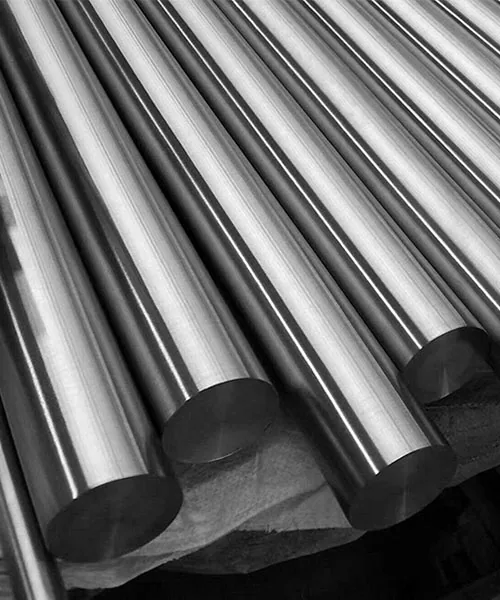
A round bar is solid cylindrical stock used as feed material for machined components, shafts, fittings and other engineered parts. The suitability of 316H at any temperature depends on the controlling design code, required material condition and actual exposure. It should not be assumed interchangeable with SS 316L or SS 316 solely from the grade name.
Procurement guide
Supply the complete purchase requirements rather than relying on the designation alone. This helps confirm the correct material and avoid dimensional or documentation differences.
Industrial uses
316H bar may be specified for machined or fabricated components in industrial systems where elevated temperature, mechanical load and corrosion exposure are assessed together. Typical application contexts include:
316H is not automatically suitable for seawater, severe chloride exposure or every pressure-retaining application. Engineering approval remains necessary.
Sizes and product specification
The source page lists several dimensions and lengths as enquiry examples. They should not be treated as guaranteed inventory or universal product-standard tolerances.
| Specification item | Enquiry guidance |
|---|---|
| Material | Stainless Steel 316H / UNS S31609 |
| Round bar standards | ASTM A276 or ASTM A479 where applicable; confirm edition and grade coverage |
| Diameter | Specify the required diameter; larger/custom sizes subject to quotation |
| Length | Specify cut or random length, including tolerance |
| Condition | State annealing, heat treatment and test requirements |
| Finish | Black, peeled, turned, ground or bright finish, subject to feasibility |
| Documentation | Material test certificate, heat traceability and inspection as required |
Other bar shapes and finishes can be considered only after grade-specific availability is confirmed. Explore hex bar, bright bar and forged bar as distinct product forms; do not assume all are stocked in 316H.
Chemical composition
The table retains the chemical ranges shown in the uploaded source, expressed as mass percentages. Acceptance must be checked against the specific material standard and edition.
| Element | Reference composition (%) |
|---|---|
| Carbon (C) | 0.04–0.10 |
| Chromium (Cr) | 16.00–18.00 |
| Nickel (Ni) | 10.00–14.00 |
| Molybdenum (Mo) | 2.00–3.00 |
| Manganese (Mn) | 2.00 max |
| Silicon (Si) | 0.75 max |
| Phosphorus (P) | 0.045 max |
| Sulfur (S) | 0.030 max |
Source-page reference values, not a certified heat analysis. Verify chemistry with the governing standard and MTC.
Mechanical properties
The uploaded page supplied the figures below. They are presented only as its reference figures; required minimums or maximums can differ by standard, diameter and condition.
| Property | Source-page value |
|---|---|
| Yield strength | 205 MPa (listed minimum) |
| Ultimate tensile strength | 515 MPa (listed minimum) |
| Elongation | 30% (source reference) |
| Reduction of area | 40% (source reference) |
| Brinell hardness | 237 (source reference; applicability to be checked) |
| Modulus of elasticity | 193 GPa (approximate reference) |
The original linked hardness to NACE MR0175 without substantiation; that designation is not used here as a blanket hardness requirement. For elevated-temperature design, use code-approved temperature-dependent properties rather than room-temperature values.
Engineering checks
Confirm allowable stress, exposure time, oxidation and creep requirements with the governing design code.
Discuss fabrication procedures and intergranular corrosion concerns; higher carbon can influence sensitization.
State diameter tolerance, length, straightness, surface finish and inspection criteria.
Request heat number, test report, marking, inspection and any third-party documentation before dispatch.
Grade designations
Use the following references for preliminary grade identification only. Substitutions between standards require an engineering and purchasing review.
| Designation system | Reference |
|---|---|
| UNS | S31609 |
| EN / DIN (source reference) | 1.4919 |
| JIS (source reference) | SUS 316H |
| ASTM bar specifications for review | ASTM A276 / ASTM A479 |
Compare SS 316, SS 316L and SS 316Ti when the drawing or service requirements identify another 316-family material.
Supply enquiries
Pricing and supply options depend on grade, diameter, manufacturing route, quantity, material condition, testing and destination. Share your bill of materials, specification and delivery terms with Piyush Steel India for a quotation. Material identification and packing requirements should be agreed before shipment.
Frequently asked questions
SS 316H is a solid round bar made from higher-carbon, molybdenum-bearing austenitic stainless steel identified as UNS S31609. Its use depends on the stated material standard and service conditions.
316H has a controlled higher carbon range and is often specified for elevated-temperature requirements. 316L is a low-carbon variant frequently selected where welding-related corrosion concerns are important. The two are not automatically interchangeable.
ASTM A276 and ASTM A479 are bar standards to review, as applicable. Include the required edition, UNS S31609 designation and any project-specific acceptance criteria.
Examples include selected heat-exchanger hardware, valve parts, machined fittings and process-industry components where temperature, corrosion and mechanical requirements have been reviewed.
Molybdenum improves resistance to certain localized corrosion mechanisms, but it does not make 316H immune to pitting or crevice corrosion. Check chloride concentration, temperature and exposure before selection.
Provide grade and product standard, diameter, length, quantity, condition, finish, tolerance, tests and certificates, delivery location and timing.
Specification-led enquiries
Include the governing standard, dimensions, quantity, condition, testing requirements, documentation, and destination.