
Standard and edition
Confirm the controlling document; a grade name or cross-reference alone is not a complete acceptance specification.
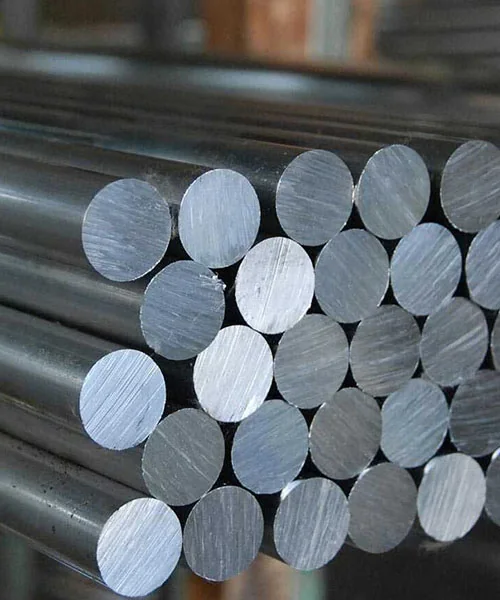
Hastelloy Round Bar
Hastelloy C276 (UNS N10276) is a nickel-molybdenum-chromium alloy with tungsten. It is used for machined parts exposed to aggressive chemicals, chlorides and acidic solutions. The alloy offers resistance to pitting, crevice corrosion and stress corrosion cracking in many service conditions.
C276 round bars are commonly specified to ASTM B574 or ASME SB574. Select the bar diameter, finish and solution-annealed condition to suit the finished component, and confirm chemical compatibility and inspection needs before ordering.
At a glance
Confirm the applicable specification and availability for your required size and condition.
Buyer selection guide
Begin with the drawing, equipment specification, or governing code. The product name identifies the material route; acceptance depends on the complete purchase specification.
Common applications
C276 round bars are used to make components exposed to corrosive process fluids where ordinary stainless steels may not provide enough resistance. Material suitability depends on chemical concentration, temperature and operating conditions.
For related corrosion-resistant grades, compare the Hastelloy round bar range and Hastelloy C22 round bar before final material selection.
Specifications
| Material designation | Hastelloy C276 / Alloy C276 / UNS N10276 |
|---|---|
| Bar and rod standard | ASTM B574 / ASME SB574 |
| European designation | EN 2.4819 / NiMo16Cr15W |
| Product | Solid round bar and rod; other bar forms subject to confirmation |
| Supply condition | Solution annealed, with processing condition stated in the purchase order |
| Surface finish | Hot worked, peeled, turned or ground, as specified |
| Dimensions | Confirm diameter, length, straightness and tolerances for the required order |
| Inspection documents | Material test certificate and additional testing as agreed |
State the required diameter, length, finish and dimensional tolerance on the enquiry. For precision-machined parts, specify the appropriate ISO tolerance class, such as h9 or h11, together with its applicable diameter range. Actual dimensions and availability need confirmation. A bright or ground bar finish may be selected where closer dimensional control is needed.
Chemical composition
Typical specified composition ranges for UNS N10276, percent by weight:
| Nickel (Ni) | Balance |
|---|---|
| Molybdenum (Mo) | 15.0–17.0% |
| Chromium (Cr) | 14.5–16.5% |
| Iron (Fe) | 4.0–7.0% |
| Tungsten (W) | 3.0–4.5% |
| Cobalt (Co) | 2.5% max |
| Manganese (Mn) | 1.0% max |
| Vanadium (V) | 0.35% max |
| Carbon (C) | 0.010% max |
| Silicon (Si) | 0.08% max |
| Copper (Cu) | 0.50% max |
Composition values are reference ranges; check the governing ASTM B574 edition and material test certificate for complete acceptance limits, including residual elements.
Mechanical properties
Illustrative room-temperature properties for solution-annealed C276 bar. These are reference values, not guaranteed acceptance minima.
| Tensile strength | Approximately 790–845 MPa (115–123 ksi), typical |
|---|---|
| 0.2% yield strength | Approximately 355–455 MPa (52–66 ksi), typical |
| Elongation | Approximately 40%, typical |
| Density | Approximately 8.89 g/cm³ |
| Heat-treatment note | Cold working changes strength and elongation; use certified properties for the actual bar size and condition |
Mechanical properties vary with bar diameter, production method and condition. Use the applicable ASTM B574 / ASME SB574 requirements and mill certificate for design and acceptance.
Technical considerations
Confirm the controlling document; a grade name or cross-reference alone is not a complete acceptance specification.
Check that property values apply to the required diameter, heat treatment, test direction and temperature.
State tolerances, straightness, length, surface finish, machining allowance, and end condition where required.
Define inspection, test reports, marking, heat identification, third-party requirements, and destination documentation.
Designations
| Alloy name | Hastelloy C276 / Alloy C276 |
|---|---|
| UNS | N10276 |
| EN / Werkstoff number | 2.4819 |
| EN designation | NiMo16Cr15W |
| Bar / rod product standard | ASTM B574 / ASME SB574 |
| Forging product standard | ASTM B564 / ASME SB564, where specified |
The designations identify the alloy. Product standards are not interchangeable without checking the required form and acceptance criteria.
Product details
C276 can work-harden during machining, which makes sharp tools, stable clamping and controlled cutting conditions important. Bars intended for machining should allow enough extra diameter for turning and finishing. The required allowance depends on the starting surface and the finished part.
Bar stock may be supplied with different surface finishes depending on its manufacturing route. Peeled, turned and ground finishes can reduce the preparation needed for precise components. Where welding or fabrication is planned, identify the complete component requirements instead of relying only on the alloy name.
For corrosion-service parts, confirm UNS N10276 and the relevant ASTM B574 edition on the purchase order. Chemical composition, mechanical test results, heat number and dimensions should be checked against the supplied certificate. Extra testing, including PMI, can be specified when the project requires it. Compare C22 round bar when evaluating another nickel alloy for the same equipment.
Product questions
It is used for corrosion-resistant machined components such as pump shafts, valve parts and fasteners in chemical and pollution-control equipment. Suitability must be checked for the actual process fluid and temperature.
ASTM B574, or its ASME adoption SB574, is commonly specified for C276 rod and bar. State the required edition and supply condition.
No. Both are corrosion-resistant nickel alloys, but their chemical compositions and performance differ. Hastelloy C22 is a separate grade and should not be substituted without approval.
Yes. C276 can work-harden, so machining normally requires suitable tools, cutting conditions and attention to the starting bar diameter and finish.
C276 is known for good resistance in many chloride-containing environments, but performance depends on concentration, temperature and exposure conditions. Verify compatibility for each service.
A material test certificate showing heat identification, chemical analysis and applicable mechanical test results can be requested. Additional PMI or third-party inspection can be agreed.
Provide UNS N10276, ASTM B574 or ASME SB574, diameter, length, quantity, finish, supply condition, tolerances, testing requirements and delivery destination.
Specification-led enquiries
Include the governing standard, dimensions, quantity, condition, testing requirements, documentation, and destination.