
Standard and edition
Confirm the controlling document; a grade name or cross-reference alone is not a complete acceptance specification.
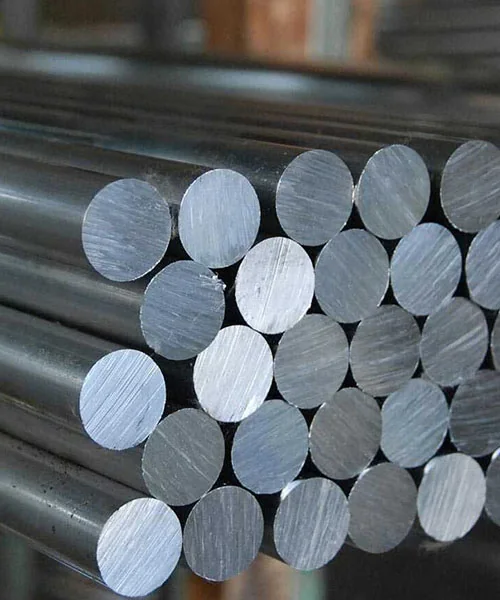
Hastelloy Round Bar
Hastelloy C22 round bar is a nickel-chromium-molybdenum-tungsten alloy identified as UNS N06022 and EN 2.4602. It resists corrosion in many chemical process environments, including conditions involving chlorides and mixed oxidizing and reducing media. Actual suitability depends on the chemical, concentration and temperature.
Round bars are used to make shafts, fasteners, valve components and other machined parts. For an enquiry, specify ASTM B574 or the applicable standard, diameter, length, supply condition, surface finish, quantity and any required inspection documents.
At a glance
Confirm the applicable specification and availability for your required size and condition.
Buyer selection guide
Check the required grade, product standard and the conditions in which the finished component will operate. ASTM B574 is used for specified nickel-alloy rods and bars, including UNS N06022.
Common applications
Hastelloy C22 is used for machined components exposed to demanding corrosion conditions. The final application must be checked against the actual process environment.
Specifications
| Requirement | Details |
|---|---|
| Alloy / grade | Hastelloy C22 / Alloy C-22, UNS N06022 |
| Werkstoff / EN designation | 2.4602 / NiCr21Mo14W |
| Round-bar specification | ASTM B574 / ASME SB574 (where specified) |
| Product form | Solid round bar / rod; other shapes require the applicable product standard |
| Supply condition | Solution-annealed, subject to the ordered specification and certificate |
| Finishes | Hot worked, peeled, turned or ground, depending on availability and requirements |
| Dimensions | State the diameter, length, straightness and dimensional tolerance needed |
| Inspection | Chemical analysis, mechanical tests, dimensional checks and heat identification as ordered |
Round-bar size and tolerance should be stated on the purchase order. For precision-machined parts, specify the required diameter tolerance, straightness, surface finish and machining allowance rather than assuming a general ISO tolerance chart applies to every delivery.
Related options include Hastelloy round bar grades and bright finished bars, depending on the required form and finish.
Chemical composition
| Element | Composition (weight %) |
|---|---|
| Nickel (Ni) | Balance |
| Chromium (Cr) | 20.0–22.5 |
| Molybdenum (Mo) | 12.5–14.5 |
| Tungsten (W) | 2.5–3.5 |
| Iron (Fe) | 2.0–6.0 |
| Cobalt (Co) | 2.5 max. |
| Manganese (Mn) | 0.50 max. |
| Silicon (Si) | 0.08 max. |
| Carbon (C) | 0.015 max. |
| Vanadium (V) | 0.35 max. |
| Phosphorus (P) | 0.020 max. |
| Sulfur (S) | 0.020 max. |
Representative UNS N06022 composition. Confirm the governing edition of ASTM B574 and the actual heat analysis on the material test certificate.
Mechanical properties
| Property | Annealed UNS N06022 bar |
|---|---|
| Tensile strength | 690 MPa (100 ksi) minimum |
| 0.2% yield strength | 310 MPa (45 ksi) minimum |
| Elongation | 45% minimum |
| Density | Approximately 8.68 g/cm³ |
| Material condition | Annealed bar; values depend on the applicable ASTM B574 edition |
The listed tensile, yield and elongation values describe annealed bar requirements; actual certified values depend on size, condition and the applicable specification. These are not guaranteed values for every heat-treated or cold-worked product.
Technical considerations
Confirm the controlling document; a grade name or cross-reference alone is not a complete acceptance specification.
Check that property values apply to the required diameter, heat treatment, test direction and temperature.
State tolerances, straightness, length, surface finish, machining allowance, and end condition where required.
Define inspection, test reports, marking, heat identification, third-party requirements, and destination documentation.
Equivalent grades
| Designation system | Reference |
|---|---|
| Commercial name | Hastelloy C22 / Alloy C-22 |
| UNS | N06022 |
| Werkstoff number | 2.4602 |
| EN designation | NiCr21Mo14W |
| JIS designation | NW 6022 (when applicable) |
| Round-bar standard | ASTM B574 / ASME SB574 |
These identifiers refer to the C22 alloy family. A designation is not by itself evidence that a delivered bar meets every requirement of a particular product standard.
Product details
C22 round bars can be supplied with different surface conditions, depending on manufacturing route and stock. Turned or ground surfaces may reduce the machining needed for close-fit parts. Buyers should specify the required finish and allowable surface defects.
The alloy offers resistance to many aggressive chemical environments, but there is no single corrosion rating that covers all acids, chlorides and temperatures. Check the process chemistry, contamination and operating temperature before selecting material for pressure or safety-critical equipment. Hastelloy C276 round bar may also be considered where its separate corrosion data matches the service.
For process equipment, match the bar's heat number to the chemical and mechanical test certificate. State any dimensional inspection, additional testing, surface examination or marking requirements when placing the order. Confirm that the certificate identifies the correct grade and product standard.
Product questions
No. C22 (UNS N06022) and C276 (UNS N10276) are different nickel alloys with different chemical compositions. Select either grade using the actual corrosion and design requirements.
ASTM B574 is a product specification for nickel-alloy rods and bars and includes UNS N06022. Check the edition required by your purchase order.
C22 offers strong resistance to chloride-related pitting and crevice corrosion in many environments. Suitability still depends on temperature, concentration and other process conditions.
Yes. Round bar can be machined into valve stems, shafts and other parts. Allow for the required finish, tolerances and appropriate machining methods.
Depending on the order and manufacturing route, bars may be hot-worked, peeled, turned or ground. Specify the surface condition rather than assuming all finishes are available.
Request a material test certificate showing the alloy designation, heat analysis, mechanical properties and heat identification, along with any additional inspections agreed in the order.
Provide UNS N06022, the required standard, diameter, length, quantity, finish, tolerance, certificate requirements and delivery destination.
Specification-led enquiries
Include the governing standard, dimensions, quantity, condition, testing requirements, documentation, and destination.