
Standard and edition
Confirm the controlling document; a grade name or cross-reference alone is not a complete acceptance specification.
Carbon Steel Round Bar
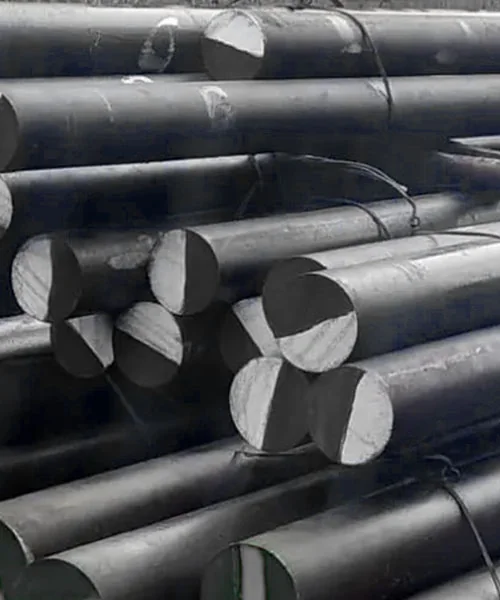
AISI 8630 is a low-alloy steel containing nickel, chromium and molybdenum. It is used for shafts, gears, oilfield connectors and other parts that need a good balance of strength and toughness. Properties depend on bar size and heat treatment.
UNS G86300 round bars may be supplied as rolled, annealed or quenched and tempered, depending on the order. Specify diameter, length, finish, mechanical requirements and inspection documents before purchase.
At a glance
Confirm the applicable specification and availability for your required size and condition.
Buyer selection guide
Begin with the drawing, equipment specification, or governing code. The product name identifies the material route; acceptance depends on the complete purchase specification.
Common applications
AISI 8630 is used to make parts that need strength, toughness and good response to heat treatment. Common examples include oilfield connectors, hangers, valve components, shafts, gears and heavy-duty machine parts.
For oil and gas equipment, the final mechanical properties, impact testing and any sour-service requirements must be confirmed against the project specification. Material selection depends on the finished part, section size and heat treatment.
Specifications
| Material | SAE/AISI 8630 nickel-chromium-molybdenum low-alloy steel |
|---|---|
| Designation | UNS G86300; DIN 1.6545 is a commonly referenced designation (confirm the required standard) |
| Bar specification | ASTM A29/A29M general requirements, or another project-specified applicable standard |
| Product form | Round bar and forged bar; other forms subject to confirmation |
| Supply condition | As rolled or forged, annealed, normalized, or quenched and tempered as specified |
| Finish | Black, peeled, turned, ground or proof-machined as required |
| Dimensions | Confirm diameter, length, straightness, tolerance and machining allowance when ordering |
| Documents and inspection | Material test certificate, chemical analysis, mechanical testing, impact testing, PMI or third-party inspection if specified |
Size, finish, condition and actual availability must be confirmed for each enquiry. Do not assume that all listed options are available in every diameter.
Chemical composition
Typical nominal composition ranges for SAE/AISI 8630 (UNS G86300), in percent by weight:
| Element | Composition (%) |
|---|---|
| Carbon (C) | 0.28–0.33 |
| Manganese (Mn) | 0.70–0.90 |
| Silicon (Si) | 0.15–0.35 |
| Nickel (Ni) | 0.40–0.70 |
| Chromium (Cr) | 0.40–0.60 |
| Molybdenum (Mo) | 0.15–0.25 |
| Phosphorus (P) | 0.035 max |
| Sulfur (S) | 0.040 max |
| Iron (Fe) | Balance |
Limits can vary with the governing specification and purchase requirements. Verify against the current applicable standard and material test certificate.
Mechanical properties
AISI 8630 has no single set of mechanical values for every size and heat-treatment condition. The following figures are illustrative reference values for annealed material, not guaranteed purchase minima.
| Property | Illustrative annealed value |
|---|---|
| Tensile strength | About 564 MPa |
| Yield strength | About 372 MPa |
| Elongation | About 29% |
| Hardness | About 156 HB |
Reference condition: annealed at approximately 845°C. Quenched-and-tempered material can have substantially different properties. Confirm test direction, diameter, heat treatment and specified minimum requirements before ordering.
Technical considerations
Confirm the controlling document; a grade name or cross-reference alone is not a complete acceptance specification.
Check that property values apply to the required diameter, heat treatment, test direction and temperature.
State tolerances, straightness, length, surface finish, machining allowance, and end condition where required.
Define inspection, test reports, marking, heat identification, third-party requirements, and destination documentation.
Grade designations
| SAE/AISI | 8630 |
|---|---|
| UNS | G86300 |
| Common DIN reference | 1.6545 (confirm exact composition and standard before substitution) |
| Material group | Nickel-chromium-molybdenum low-alloy steel |
These are designation references, not permission to substitute material without checking the governing specification.
Product details
AISI 8630 can be annealed, normalized, or quenched and tempered. The final strength and toughness depend on heat treatment and bar diameter. Larger sections may cool differently from small ones, so confirm the required properties for the actual size rather than relying on a general grade description.
Round bars may be supplied with black, peeled, turned or ground surfaces. A bar intended for machining may need additional diameter allowance so the finished part can meet its drawing. Straightness, surface condition and dimensional tolerance should be agreed before material is cut.
Oilfield parts such as connectors and valve components may need tensile tests, impact tests, hardness checks or additional examination. Where sour service applies, the project may require specific hardness limits and compliance with the applicable NACE MR0175 / ISO 15156 requirements. The purchase order should identify the tests, acceptance limits, heat-number traceability and certificate type.
For related grades, see carbon steel round bars, AISI 1045 round bars and ASTM A350 LF2 round bars. You can also check different forged bar forms or use the round bar weight calculator when preparing your enquiry.
Product questions
AISI 8630 is a nickel-chromium-molybdenum low-alloy steel. It is listed under this website’s carbon steel product directory, but it should be ordered and certified as the correct alloy grade.
It is often used for oilfield connectors, valve components, shafts, gears and other heavy-duty machine parts where strength and toughness matter.
Yes. Quenching and tempering can be used to achieve specified properties, but the results depend on diameter, the process used and the purchase requirements.
It may be suitable for some sour-service applications only when the material condition, hardness and other requirements meet the applicable project specifications and NACE MR0175 / ISO 15156. Grade name alone is not enough.
Depending on the order, buyers can request a material test certificate with chemical and mechanical results, heat-number traceability, impact testing or third-party inspection.
Provide the standard, bar diameter, length, quantity, supply condition, finish, tolerances, required tests and delivery destination.
Specification-led enquiries
Include the governing standard, dimensions, quantity, condition, testing requirements, documentation, and destination.