
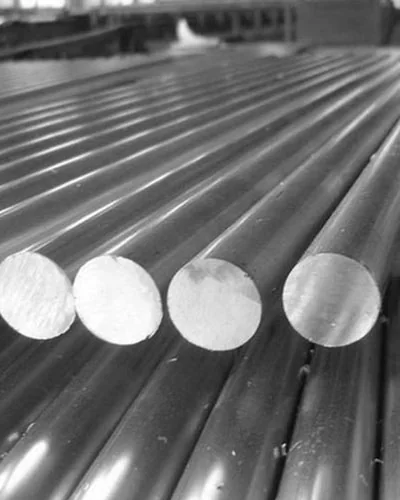
Separate the material from the product form
Carbon steel, alloy steel and stainless steel can all be supplied as round bar. A grade designation identifies the material; a bar specification also addresses the product being ordered. Use both when defining a purchase. A tube or pipe has a hollow section and should not be confused with solid bar.
Hot-rolled and cold-finished bars
Producers offer hot-rolled and cold-finished bar ranges. The chosen route affects the available finish and dimensional requirements. Specify diameter tolerance, straightness, surface condition and machining allowance explicitly. Do not use the word 'bright' as a substitute for a dimensional tolerance or inspection requirement.
Choosing a stainless grade
For machining, 303 is a sulfur-modified stainless grade. That machining benefit brings corrosion and welding trade-offs. Common alternatives such as 304 or 316 require a separate assessment of the environment and manufacturing route. Grade 316 contains molybdenum; it is not a universal upgrade for every application.
Applications start with a drawing
A shaft enquiry should identify the working diameter, length and finish. A fastener blank may need a different condition and inspection scope. For regulated equipment, the design specification controls material acceptance. General-purpose round bar should not be substituted for reinforcing bar or a qualified aerospace component without the required approval.
Check the usable material allowance
Compare starting diameter and cut length with the finished component. Allow for the planned machining and inspection route, then agree tolerances with the supplier. Buying a nominal diameter without those details can leave insufficient stock for finishing or increase avoidable machining.
Prepare a clear request for quotation
List the grade, product standard and edition, size, quantity, supplied condition and finish. Add the required certificate, traceability and testing. If you are still selecting the material, include the application and service conditions so the enquiry can be reviewed against an explicit requirement.